Small Modular Nuclear Projects Advance Amid Supply Chain Challenges
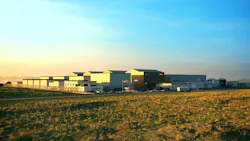
Advanced nuclear-energy projects have ramped up this summer, with Dow and X-energy announcing several key milestones over the past three months for their joint effort.
In August, the U.S. Department of Energy awarded X-energy another $1 billion in funding to build four small modular reactors (SMR) at Dow’s Long Mott Generating Station in Seadrift, Texas, said X-energy CEO Clay Sell in an earnings call. The additional amount increases the DOE’s cost share contribution for the proposed nuclear plant to $2.1 billion.
The news comes about three months after the U.S. Nuclear Regulatory Commission (NRC) completed its environmental assessment of the project, issuing a finding of no significant impact.
NRC is currently conducting its safety review of the site, the final step before issuing a construction permit for the project, said Helena Alonso, a spokesperson from Dow’s corporate media relations department.
Dow expects to receive the construction permit by the end of 2026, Alonso said in an email response. If approved, the plant would supply process heat and electricity to the Seadrift Operations. It would also be the first advanced nuclear facility at an industrial site in the United States, according to the U.S. Department of Energy.
Current SMR Status
The Dow/X-energy project, along with several others outside the chemical industry, is being closely watched by investors for its “first-of-a-kind,” or FOAK, technology. Major projects funded by the U.S. Department of Energy’s Advanced Reactor Demonstration Program, such as the Dow/X-energy collaboration, could come online by the early 2030s, said Jim Harrell, chief nuclear officer for consulting firm Zachry Nuclear.
Globally, there are more than 100 SMR designs at various stages of development, with a few already operational, according to the World Nuclear Association. But developers must overcome supply chain, workforce and permitting challenges before the technology can advance at scale.
The construction permit only allows the reactor to be built. Developers will need to apply for an operation license after construction to run the plant, said Mason Lester, principal analyst, North America power and renewables research, S&P Global Energy.
“The reason these SMR projects go this route, instead of applying for everything at once, is because they expect changes/modifications to be made to the design throughout the construction process,” said Lester in an email.
Dow has not publicly disclosed a construction-cost figure for the proposed project, Alonso said.
The company will use X-energy’s Xe-100 high-temperature, gas-cooled reactor, which employs a proprietary version of tri-structural isotropic, or TRISO, fuel particles. The uranium kernels are contained in graphite spheres called “fuel pebbles.”
In August, X-energy entered into an agreement with SGL Carbon to secure nuclear-grade graphite for Xe-100 reactor's pebble-bed core.
The fuel structure is said to be more robust than traditional reactor fuels, making them more resistant to neutron irradiation, corrosion, oxidation and high temperatures. The uniqueness of the technology will require new supply chains and construction techniques, Lester said.
“These factors, along with its unique financial engagement with Dow, a chemical company and not an electric utility, are what could hinder project success,” he said.
Dusting Off the Nuclear Supply Chain
The lack of nuclear power plant construction over the past three decades has created a supply chain void, according to the report, “Advanced and Small Modular Reactors’ supply chain: Current status and potential for global cooperation,” published in the June 2025 edition of Progress in Nuclear Energy.
The authors cite figures from the World Nuclear Supply Chain Outlook showing that suppliers with nuclear certifications have declined significantly over the past decade due to low demand.
That means critical components and materials, such as heavy forgings, safety-related valves and instrumentation and control manufacturing at commercial scale don’t currently exist at the volumes SMR programs will need, said Harrell.
“This creates a chicken-and-egg dynamic where suppliers are reluctant to invest in capacity without firm, multi-unit order books —a dynamic only recently starting to break as hyperscaler PPAs (purchase power agreements) have turned speculative projects into bankable assets,” Harrell said.
SMRs require uranium enriched at lower levels. This high-assay low-enriched uranium, or HALEU, can be produced with existing centrifuge technology but requires dedicated fuel-cycle infrastructure, new transport containers and significant capital investment, Harrell said.
That means continued government funding is necessary until commercial demand spurs private investment.
“Rebuilding a domestic supply chain independent of Russian sources means standing up conversion, enrichment, deconversion, fabrication, transport, licensing and workforce capacity essentially from scratch —an industrial-base problem, not a paperwork one,” Harrell explained.
Hiring Dilemma
Workforce readiness remains another hurdle that could slow SMR development. While the technology is proven and safety has been well established, the workforce is the real constraint once volume ramps up, said Dan Arczynski, president and CEO for Index AR Solutions, during a panel discussion at the eChem Expo in April.
“I see that as a constraint, but I'm really ready for these SMRs to go,” said Arczynski, a former sector vice president at Northrop Grumman.
Harrell, who was on the same panel as Arczynski, noted that nuclear-qualified welders, machinists and inspectors are in short supply.
“This shortage compounds the fabrication bottleneck rather than sitting separately from it; both constraints have to ease together for factory throughput to actually increase,” said Harrell in an email.
Community Pushback
The good news for the chemical sector and other process industries is that first-mover projects like the Dow’s Seadrift endeavor will serve as test cases for future SMRs. They will absorb most of the risk while qualifying suppliers and building workforce pipelines that later adopters can then leverage, according to Harrell.
“Realistic timelines for at-scale deployment in chemical-sector applications should assume these constraints ease gradually through the early 2030s, paced by order-book visibility and standardized designs, rather than by reactor engineering progress alone,” he said.
For now, don't expect SMRs to outright compete with natural gas-fired turbines, Lester said. These FOAK projects would need to be built successfully, orders and interest in SMRs would need to increase dramatically, and chemical companies would still need to be willing to pay a premium for nuclear, he said.
The projects could also face increasing pushback from activists. In February, NRC granted San Antonio Bay Estuarine Waterkeeper a petition to intervene by NRC, which gives the environmental group the right to participate in hearings.
Waterkeeper, representing the local fishing community and residents on the Texas Gulf Coast, petitioned NRC in 2025 to reject the construction permit. The petition originally contented that the Long Mott’s proposed "functional containment" design failed to demonstrate compliance with applicable regulations, that the company failed to demonstrate its financial qualifications to build and operate the plant and that Dow’s environmental report erroneously minimized the plant's adverse environmental impacts.
NRC granted the petition based on Waterkeeper’s request to review Dow’s financial qualifications. Waterkeeper has also pointed to Dow's announced elimination of roughly 4,500 jobs in January as further evidence bearing on the company's financial qualifications.
NRC will hold a mandatory hearing Sept. 22 in Lavaca, Texas, which is open to members of the public to ask questions and provide feedback on the construction application. The purpose of the hearing is for NRC staff to explain the review process, provide a brief overview of the Long Mott Generating Station construction permit application, explain where the public can obtain further information and provide an opportunity for public engagement in the review process, said Tressa Smith, public affairs officer for NRC’s Region IV.
“NRC staff will consider and incorporate comments and questions into its review of the LMGS construction permit application,” Smith said.
NRC plans to issue the final safety evaluation for the construction permit application in November, Smith said.
The hearing record for comments will remain open until Oct. 6.
Related Reading



About the Author
 Jonathan Katz
Jonathan Katz
Executive Editor
Jonathan Katz, executive editor, brings nearly two decades of experience as a B2B journalist to Chemical Processing magazine. He has expertise on a wide range of industrial topics. Jon previously served as the managing editor for IndustryWeek magazine and, most recently, as a freelance writer specializing in content marketing for the manufacturing sector.
His knowledge areas include industrial safety, environmental compliance/sustainability, lean manufacturing/continuous improvement, Industry 4.0/automation and many other topics of interest to the Chemical Processing audience.
When he’s not working, Jon enjoys fishing, hiking and music, including a small but growing vinyl collection.
Jon resides in the Cleveland, Ohio, area.