BASF Opens Superabsorbent Performance Lab in India
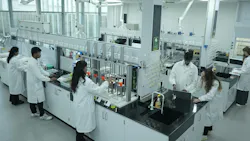
BASF has opened a 200-square-meter performance lab for superabsorbents and diapers at its Innovation Campus Asia Pacific in Mumbai, India, expanding the company’s global technical support capabilities for hygiene-product manufacturers.
The lab, which BASF’s Hygiene Solutions business established in less than a year, can perform more than 30 testing methods for superabsorbent polymers (SAP) and finished diaper performance. According to the company, the facility will support application development and benchmarking for baby diapers, adult incontinence products and feminine hygiene products.
The facility will provide technical services and application expertise to BASF’s superabsorbent customers globally and will collaborate with the company’s existing Global Product Development Lab for superabsorbents in Ludwigshafen, Germany.
For process engineers and operators, the facility reflects the increasing role of application and performance testing in optimizing specialty chemical formulations and their performance in finished products. BASF said the Mumbai lab will enable faster testing and knowledge exchange with customers and support development of new superabsorbent solutions.
BASF’s Mumbai Innovation Campus, established in 2017, is the company’s second-largest research and development site in the Asia Pacific region. The company operates a global production network for superabsorbents.
The Mumbai lab is the latest in a series of BASF R&D initiatives. Earlier this month, BASF and Stanford University researchers reported developing a multimetallic nanocrystal catalyst for ammonia decomposition that could improve hydrogen production while reducing reliance on precious metals. The catalyst is designed to improve activity and stability and could support development of industrial ammonia-cracking technology. The research, published in Science, is part of BASF’s eight-year California Research Alliance collaboration with Stanford.
BASF also said the collaboration has previously produced commercial catalyst technology, including a VOC catalyst introduced in 2024. The company plans to expand the research partnership into additional catalyst applications where reducing precious-metal use is a priority.