Who's Responsible When a Contractor Gets Killed?
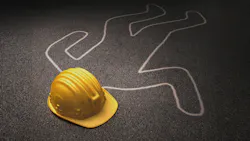
Contract workers have become an integral part of the chemical industry workforce. Over the past decade, chemical plants have become increasingly reliant on contractors to supplement their existing workforce. These workers often go unnoticed until an accident occurs. That scenario played out in 2024 when two contract maintenance workers died, and 13 others were injured at the PEMEX Deer Park Refinery in Deer Park, Texas.
The crew, from contractor Repcon Inc., opened a flange on piping that still contained pressurized hydrogen sulfide instead of a nearby section that was empty, according to a U.S. Chemical Safety and Hazard Board investigation report released in February.
PEMEX had informed the workers about precautions they should take when working in the emptied unit but didn’t educate them about the hazards associated with the operational piping, CSB stated. Similar situations present confusion in chemical operations about who is responsible for ensuring worker safety when contractors are on site.
Many organizations falsely believe their agreement with a contractor protects them from liability issues, said Jamil Fazilov, global environmental health and safety director for Tormod.
“If OSHA comes out and they do an investigation, they're not going to ask whose name is on the contract,” said Fazilov during his presentation April 8 at the eChem Expo in Kingsport, Tennessee. Honestly, they don't care. What they care about is the level of control you have over the hazard for the work. That's all they care about.”
Under the Occupational Health and Safety Administration’s multi-employer work site liability rules, all parties involved in the work can receive fines, Fazilov said. The agency categorizes those responsible based on their relationship to the hazard.
Fazilov described a hypothetical scenario in which a refinery outsources welding work to a contractor, who then subcontracts the job. In this example, a worker is injured after a pocket of hydrocarbons ignites from a welding spark. Even if the refinery presented signed permits validating the vessel was isolated from hazardous materials, the company performing the work is still liable, said Fazilov.
But that doesn’t mean the owner and plant operator won’t receive a fine. That’s because OSHA issues fines based on several factors, including who caused the hazardous condition (creating employer), the entity that exposed the workers to the hazard (exposing employer), who has supervisory authority over the worksite (controlling employer) and who is responsible for resolving the hazard (correcting employer).
In Fazilov’s example, the creating employer was the welder, or subcontractor, who created the spark that led to the explosion. However, all parties would be considered the “exposing employer” and receive fines, Fazilov said. The controlling employer would be both the owner and primary contractor, while the correcting party may then hold the exposing party responsible for correcting the problem, which could lead to double fines.
“You can have a situation where you can get cited across the board — $100,000 per violation,” he said.
Preventive Measures
A subcontractor mishap is rarely due to a missing clause in a contract, Fazilov said.
“It's usually a combination of pre-qualification, vetting, onsite control and documentation,” he said.
It’s important to look at a contractor’s safety history prior to starting work, including past OSHA violations. Another potential problem is overwhelming bid documentation.
“How many times do we send thousands and thousands of contract HSE (health, safety, environment) requirements to our contractors?” Fazilov said. “Do you think that works? Probably not. It just overwhelms them. A lot of things get missed, and if there are gaps, you're not going to find out until it's way down the line.”
Plant operators should aim to simplify HSE documentation and tailor it to the project's scope, according to Fazilov. These sessions can expose misalignment between a contractor’s safety practices and regulatory requirements. Effective onsite control is critical because unclear direction and multiple permit approvers can create confusion and inefficiency. It’s also important to set realistic production goals that don’t compromise safety, Fazilov said.
Responding to Fatalities
Documentation and due diligence prove invaluable when the worst-case scenario occurs. If a worker dies from a safety incident, plants face potential federal or state investigations. Prosecutors look for gross negligence, willful misconduct, falsified records and maintenance records, Fazilov said.
“It's important to know both corporations and individuals can be held liable, not just the company,” he said. “They can come after the individuals and arrest you if they found that you're grossly negligent or just completely ignoring safety systems.”
Plant operators should immediately contact legal counsel, secure the scene and conduct an investigation to identify any systematic failures.
Supervisors could face personal citations if investigators determine the individual there's going had the authority to correct the hazard, knew about the issue and did nothing about it.
“Some common triggers include directing unsafe facts, failing to enforce safety rules or just ignoring hazards altogether,” Fazilov said.
About the Author
 Jonathan Katz
Jonathan Katz
Executive Editor
Jonathan Katz, executive editor, brings nearly two decades of experience as a B2B journalist to Chemical Processing magazine. He has expertise on a wide range of industrial topics. Jon previously served as the managing editor for IndustryWeek magazine and, most recently, as a freelance writer specializing in content marketing for the manufacturing sector.
His knowledge areas include industrial safety, environmental compliance/sustainability, lean manufacturing/continuous improvement, Industry 4.0/automation and many other topics of interest to the Chemical Processing audience.
When he’s not working, Jon enjoys fishing, hiking and music, including a small but growing vinyl collection.
Jon resides in the Cleveland, Ohio, area.