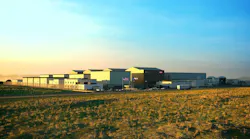
Dow's Texas Nuclear Project Receives NRC Construction Permit

Dow, a Midland, Michigan-based chemical manufacturer, said Nov. 9 that the U.S. Nuclear Regulatory Commission (NRC) issued a construction permit for the proposed Long Mott Generating Station at its Seadrift Operations site in Texas. The project is being developed through Dow subsidiary Long Mott Energy in collaboration with X-energy under the U.S. Department of Energy's Advanced Reactor Demonstration Program.
The proposed facility would comprise four Xe-100 high-temperature gas-cooled reactors, each designed to generate 80 megawatts of electricity and 200 megawatts of thermal output. Together, the reactors would provide 320 MW of electrical capacity and 800 MW of thermal capacity. The nuclear facility is intended to supply both electricity and high-temperature steam to Dow's Seadrift manufacturing complex, replacing existing energy and steam assets nearing the end of their operating lives.
X-energy's Xe-100 design uses helium as a coolant and tri-structural isotropic (TRISO) coated-particle fuel arranged in a pebble-bed configuration. The NRC's approval marks the first construction permit for a high-temperature gas-cooled reactor in nearly 60 years and the first for a proposed nuclear facility at a U.S. industrial site.
The permit completes the NRC's safety and environmental reviews, but it does not represent a final decision by Dow to proceed with construction. The company said additional engineering and design work, along with review by its Board of Directors, must be completed before construction activities can begin. X-energy said Dow is expected to consider a preliminary investment decision in 2027, with full-scale construction dependent on a subsequent final investment decision.
Following construction, the project will also require a separate NRC operating license before the reactors can be fueled and brought online. Dow currently anticipates construction could begin later this decade, with startup in the early 2030s.
The permit follows several earlier regulatory milestones. In May, the NRC completed its environmental assessment of the proposed facility and issued a finding of no significant impact. The assessment evaluated potential effects on air quality, water resources and local habitats. The agency subsequently completed its safety review before issuing the construction permit.
The project also faces broader first-of-a-kind development challenges. As Chemical Processing reported in September, limited supplier capacity and workforce availability could affect the pace of small modular reactor deployment. X-energy said the next phase of the Long Mott project will include finalizing the reactor design, developing the supply chain for long-lead components and preparing an operating license application.