CSB Final Report Cites Safety Failures in 2024 Bio-Lab Fire
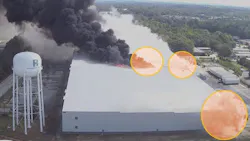
The U.S. Chemical Safety and Hazard Investigation Board (CSB) has released its final investigation report into the Sept. 29, 2024, fire and toxic gas release at KIK Consumer Products' Bio-Lab warehouse in Conyers, Georgia, concluding that inadequate safeguards for storing reactive chemicals contributed to the incident.
According to the CSB, the incident began when water leaked from a corroded sprinkler component and contacted chlorinated isocyanurates stored inside the Plant 12 warehouse. The resulting chemical reaction generated heat, fires and a toxic plume containing chlorine, hydrogen chloride, bromine and other substances. Local media reported that approximately 17,000 nearby residents were evacuated and about 90,000 people in the Atlanta metropolitan area were advised to shelter in place.
The investigation found that nearly 14 million pounds of reactive chemicals were stored in the warehouse at the time of the incident, more than double the inventory originally identified to local officials before the facility was built in 2019.
According to the agency, the warehouse contained about 5,000 large woven polypropylene "super sacks" of chlorinated isocyanurates. The bags were not waterproof, and the building lacked air conditioning while its ventilation system was insufficient to control humidity. The board said chlorine off-gassing combined with moisture to form hydrochloric acid that corroded metal sprinkler components. During an annual inspection in 2023, more than 1,100 sprinkler heads were found to be corroded.
The CSB determined that a corroded sprinkler component failed early on the morning of the incident, allowing water to contact the reactive chemicals. The decomposition reaction activated additional sprinklers, wetting more chemicals and producing additional heat, toxic vapors and fires that ultimately destroyed the warehouse. The damage resulted in KIK permanently ceasing operations at the Conyers facility on May 15, 2025.
The board identified five primary safety issues that contributed to the severity of the event: operating equipment until failure, inadequate identification of storage hazards, deficiencies in risk management and oversight, insufficient industry guidance for pool-treatment chemicals and limited regulatory coverage of reactive chemical hazards.
“There have been several other incidents in recent years involving pool-treatment chemicals that resulted in the release of chlorine gas or other potentially toxic by-products, including the September 2020 incident at the Bio-Lab Lake Charles facility in Westlake, Louisiana, that was investigated by the CSB,” Vonzella Vincent, CSB lead investigator, said in a statement.
The report also notes that chlorinated isocyanurates and other reactive chemicals involved in the incident are not covered by OSHA's Process Safety Management standard or EPA's Risk Management Plan rule. As a result, the CSB reiterated previous recommendations urging both agencies to expand regulatory oversight of reactive chemical hazards and also issued recommendations to KIK Consumer Products and the National Fire Protection Association.
The Bio-Lab report follows another recent CSB investigation update issued last week on the fatal hydrogen sulfide release at Woodland Pulp's Baileyville, Maine, mill. In that investigation, the board identified deficiencies including the absence of fixed hydrogen sulfide detectors, a lack of personal gas monitors and inadequate personnel tracking during a planned shutdown. The CSB said that investigation remains ongoing, with additional findings and recommendations expected in a final report.