Stop Maintaining on the Calendar, Start Maintaining on Condition
Preventive maintenance schedules are squeezing productivity out of plants. The planned checks aren’t even catching all the potential failures, leaving manufacturers with lost time and wasted money, said Sandy Gates, national sales manager for process industries for Mettler-Toledo.
While plants have come a long way since the days of reactive maintenance, they’re stuck in a cycle of routine service plans that deplete resources, said Gates during her presentation at the eChem Expo in Kingsport, Tennessee, earlier this year.
“We maintain too often, and we still miss failures,” she said. “Those two things are not a contradiction. They’re a consequence of the same problem.”
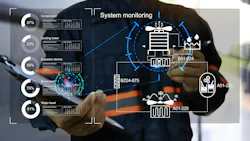
Smart instrumentation eliminates much of the maintenance guesswork via real-time condition monitoring. These devices are “self-aware,” providing information about their current condition at a particular moment in time, Gates said.
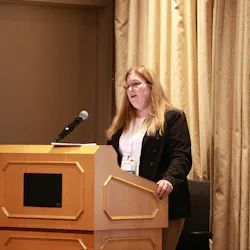
“Now we can shift our thinking from maintenance on a schedule to one that’s operationally important in this moment in time,” she said. “So now we’re not assuming it needs to be maintained anymore. We know it needs to be maintained because instruments can tell us the condition in real time.”
Smart sensors provide operators with a live condition indicator rather than a calendar reminder, so they’re only servicing the equipment when needed. Guided maintenance software embedded in these devices can walk technicians through calibration and service procedures step by step, producing reproducible results regardless of experience level.
For example, modern pH sensors can provide more than information about acidity. They’re like “dynamic life indicators” that provide information about slope and glass impedance, Gates explained.
“It gives you a green indicator that everything’s OK,” Gates said. “So now you only replace the sensor when you need to. You calibrate it when you need to. It’ll tell you everything it’s ever seen, which is pretty amazing.”
Gates offered several examples of process plants saving money and reducing downtime through predictive maintenance. This includes BASF’s transition at its Geismar, Louisiana, facility eight years ago to condition-based monitoring. Since the initial implementation, the company has made predictive maintenance the global standard across its operations, Gates said.
Dow’s Midland, Michigan, site is using predictive maintenance to reduce risk, allowing operators to monitor equipment without having to physically touch it.
The company expects significant savings by not having to make unnecessary equipment purchases and reduced labor costs, according to Gates.
Despite these advances, only about 30% of maintenance routines today are predictive, Gates said. These plants are missing opportunities to optimize their service intervals.
“When maintenance is triggered by an actual condition instead of servicing on a calendar, then you ‘A,’ reduce unnecessary work, ‘B,’ extend equipment life and also prevent premature replacement,” she said. “It’s less cost, it’s more efficient, it reduces unnecessary work.”
Many plants are struggling to implement smart instrumentation because they have old equipment and siloed systems that don’t communicate with each other, Gates said.
The implementation path does not require a facility-wide transformation. It requires leadership, Gates said. Pick a high-maintenance area with measurable outcomes, build early adopters internally and demonstrate results before scaling. Trying to convert an entire site at once can be a recipe for failure.
“Start small because trust is one of the biggest issues for most organizations,” she said. “It’s the hardest part. And then as you show success there, you can scale it across the plant.”
Begin with operations that already have significant maintenance issues, such as unplanned crashes or safety-sensitive processes, Gates suggested.
“Any time there is a safety application that minimizes exposure to others, that’s a great place to start,” she said.
For the next five to 10 years, Gates expects to see AI-assisted maintenance become more commonplace on the plant floor.
“We see a lot of autonomous diagnostics, more condition-based monitoring equipment, sensors and capabilities, a lot of remote expertise available, a lot of enterprise integration,” Gates said. “If your organization is just at the start of this, the opportunity door is wide open.”
About the Author
 Jonathan Katz
Jonathan Katz
Executive Editor
Jonathan Katz, executive editor, brings nearly two decades of experience as a B2B journalist to Chemical Processing magazine. He has expertise on a wide range of industrial topics. Jon previously served as the managing editor for IndustryWeek magazine and, most recently, as a freelance writer specializing in content marketing for the manufacturing sector.
His knowledge areas include industrial safety, environmental compliance/sustainability, lean manufacturing/continuous improvement, Industry 4.0/automation and many other topics of interest to the Chemical Processing audience.
When he’s not working, Jon enjoys fishing, hiking and music, including a small but growing vinyl collection.
Jon resides in the Cleveland, Ohio, area.