Molten Commissions Methane Pyrolysis Plant for Battery-Grade Graphite
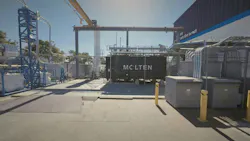
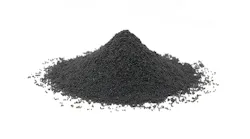
Molten Industries, an Oakland, California-based materials developer, said Nov. 18 it has commissioned a demonstration plant that converts natural gas into battery-grade graphite and hydrogen. The company describes the facility as the first to produce battery-grade graphite from natural gas using methane pyrolysis.
The process applies heat to methane (CH₄), splitting it into solid carbon and hydrogen (H₂) without oxygen or combustion. Molten uses an electrically heated modular reactor to drive the reaction. Reactor conditions control the carbon's crystallinity, particle size and shape, after which the material undergoes milling and blending to meet battery manufacturers' specifications.
The Oakland facility reportedly uses one modular reactor and has an annual production capacity of 300 metric tons of graphite anode material. Molten reports natural gas-to-graphite yields exceeding 95%. The company also says its process requires approximately one-third the electricity of conventional synthetic graphite production and eliminates the need for a separate graphitization furnace.
The facility's hydrogen output is a coproduct of the process. Hydrogen is used as a feedstock in ammonia, methanol and other chemical manufacturing, as well as petroleum refining and steel production.
Molten plans to make samples of its MG Series graphite available to prospective customers beginning Dec. 1 for evaluation in battery applications. The company has not disclosed the identities of prospective customers or announced a location for its next production facility.
The commissioning follows an earlier development plan in June 2024, when Molten closed a $25 million Series A financing round to develop its modular reactor technology. At the time, the company outlined plans for a larger installation using approximately 20 modular reactors, with projected annual production of 15,000 metric tons of graphite and 5,000 metric tons of hydrogen at a chemical or steel manufacturing site.
Why it Matters
Battery-grade graphite supply remains highly concentrated. The International Energy Agency's 2026 Global Critical Minerals Outlook estimates that China accounted for approximately 94% of global battery-grade graphite supply in 2025, including natural and synthetic graphite. The agency projects that China's share will remain approximately 91% in 2035, despite planned production increases elsewhere.
The concentration is significant for battery manufacturers seeking alternative sources of anode materials. Graphite is the primary material used in the anodes of most lithium-ion batteries, including those used in electric vehicles and energy storage systems.
Methane pyrolysis offers an alternative to conventional synthetic graphite production, which typically uses petroleum coke as a carbon source and requires high-temperature graphitization. Molten's approach instead uses natural gas to produce solid carbon and hydrogen in the same process. The company says the reaction does not generate CO₂ directly, although that does not establish zero life-cycle emissions; those would also depend on natural gas production, methane leakage and the electricity source.
At 300 metric tons of annual capacity, the Oakland facility remains a demonstration-scale operation rather than a significant new source of global graphite supply. Its next steps will include customer evaluation of the material and further development of the modular process for larger installations.