Novel Molten Metal Process Produces Battery-Grade Graphite from Ethane
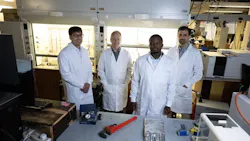
Researchers at the University of Pittsburgh’s Swanson School of Engineering announce they have developed a lower-temperature process that converts ethane into battery-grade graphite and hydrogen, potentially creating a more energy-efficient route for producing key materials used in lithium-ion batteries and clean energy systems.
The work originated from research focused on improving ethylene production efficiency through molten metal catalysis. During experiments, the team discovered that carbon byproducts generated during ethane dehydrogenation formed high-quality graphite structures instead of unwanted deposits. According to the researchers, the process operates below 1,000°C, significantly lower than the approximately 3,000°C temperatures used in conventional graphite manufacturing.
The research team, led by Götz Veser, a professor in the university’s Department of Chemical and Petroleum Engineering, investigated molten-metal catalysis as an alternative to traditional steam-cracking processes, which are energy-intensive and require periodic shutdowns to remove carbon buildup from reactor surfaces. In the molten metal system, carbon separates naturally from the reaction zone and rises to the surface, reducing fouling concerns.
“Molten metals have an amazing advantage,” Mohammad Masnadi, research team member and assistant professor, said in a statement. “Because of the extreme density of the liquid metals, the carbon floats out to rest on the top.”
Researchers later determined that the resulting carbon material was battery-quality graphite suitable for lithium-ion battery applications. According to the team, the process also produces hydrogen as a co-product, adding potential value for energy and industrial markets.
The researchers launched startup company Graphonos Materials to commercialize the technology and are currently raising funding to develop a fully integrated bench-scale system capable of kilogram-scale daily production. According to Veser, the next phase will provide engineering data needed to design a pilot-scale unit.
The team said the process could support domestic graphite production while creating lower-emission pathways for converting natural gas feedstocks into materials needed for electrification and energy storage markets.