U.S. Lithium Supply Push Highlights Need for Domestic Processing
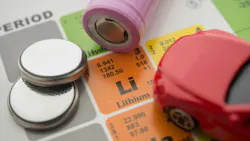
A soft, silvery alkali metal crucial in the manufacture of rechargeable batteries, lithium is likely to remain an important strategic resource for decades even as the energy industry evolves.
That’s according to Waco economist Ray Perryman and Odessa oilman Kirk Edwards, who say the U.S. is moving decisively to become less dependent on China and other foreign countries for lithium.
Perryman says rechargeable batteries are increasingly essential not only for electric vehicles and consumer electronics but also for utility-scale energy storage, allowing electricity generated by wind and solar to be stored and used when needed.
“Lithium also has important non-battery applications including glass and ceramics, industrial lubricants, air-conditioning and air-treatment systems and certain medical products,” he said. “The United States has substantial lithium resources, thus dependence on China and other foreign suppliers is not inevitable.
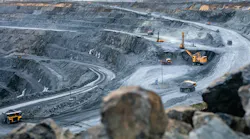
“Domestic development is underway including hard-rock mining, extraction from underground brines, geothermal resources and lithium-bearing clay deposits.”
But Perryman said the bigger challenge is not simply mining lithium, it is developing the refining, chemical processing and battery-manufacturing capacity needed to turn raw materials into finished products.
“China currently dominates much of this processing and battery supply chain, leaving the United States vulnerable even if it can obtain lithium from domestic mines or other countries,” he said. “The federal government has become increasingly involved in securing domestic supplies through loans, grants, research funding and support for battery manufacturing and recycling.
“Lithium supply chains have national security implications and private companies may be reluctant to make the large, long-term investments necessary to compete with heavily established foreign producers.”
Perryman said Texas may have an opportunity to become an important domestic lithium-producing region without relying entirely on traditional mining.
“The Permian Basin contains significant quantities of lithium in underground oilfield brines and produced water and companies are exploring technologies that can recover it from these existing water streams using direct lithium extraction,” he said. “This approach could create an additional revenue stream for oil and gas operators, make use of existing wells, pipelines and processing infrastructure and potentially reduce the volume of produced water requiring disposal.
“It also offers the possibility of diversifying the Permian Basin economy as the energy industry changes. Clearly there is an opportunity, but the question is whether production can occur at commercially competitive rates.”
Edwards said Nevada is becoming a major development area, the Carolinas have substantial hard-rock resources and there are very interesting lithium-rich brines being evaluated in Arkansas, East Texas and California.
“Our bigger challenge is not whether we have lithium, it is whether we can permit, finance, process and bring those resources to market competitively,” he said. “China’s real advantage today is also broader than simply mining lithium.
“It has built an enormous lead in refining minerals and manufacturing battery materials and batteries.”
Edwards said the entire supply chain must be considered, not just digging lithium out of the ground.
Although batteries dominate the market today, he said, lithium is also used in specialty glass and ceramics, lubricating greases, aerospace alloys, air-treatment systems, pharmaceuticals and a number of industrial processes.
“But batteries account for close to 90 percent of global lithium use today, so that is clearly what is driving demand,” Edwards said, adding that lithium batteries are evolving.
“Lithium-ion batteries continue to improve in cost, safety, charging speed, life and energy density,” he said. “We are also seeing different battery chemistries emerge.
“Some use less nickel and cobalt, for example, while still relying on lithium.”
Edwards said batteries are no longer just about electric cars and cell phones.
“Grid storage, data centers, military systems, drones, industrial equipment and backup power are becoming increasingly important markets,” he said. “As our economy becomes more dependent on electricity, reliable energy storage becomes more valuable.
“The federal government is already substantially involved in loans, grants, research programs and incentives for domestic mining, processing, battery manufacturing and recycling. I think government has an appropriate role here because lithium has become both an economic security and national security issue.
“Where government can probably help the most is creating a predictable permitting process, supporting new extraction and processing technology and helping domestic projects get across the gap between proving a resource and actually reaching commercial production.”
Government does not necessarily need to pick every winner, he said, but there should be a national strategy to recognize that critical minerals are strategic assets.
Edwards said mining companies, major automakers, energy companies and technology companies are investing in domestic lithium projects.
“GM, for example, has made a major commitment to the Thacker Pass development in Nevada and companies are pursuing lithium from brines in Arkansas and East Texas,” he said. “One of the most interesting developments to me is direct lithium extraction from underground brines.
“That starts to look much more familiar to people from the oil and gas industry because you’re dealing with subsurface geology, wells, fluid handling and processing rather than just traditional open-pit mining. Areas of Texas and the Gulf Coast could ultimately participate in that business.”
Edwards said the difficulty is that lithium prices can fluctuate dramatically.
“We need companies willing to invest through the commodity cycle rather than only when lithium prices are high,” he said.
Asked if lithium will always be as important as it is now, Edwards said, “I would be careful saying ‘always,’ because technology has a way of surprising us.
“Sodium-ion batteries and other technologies could eventually replace lithium in certain applications, but I don’t see lithium disappearing anytime soon.
“There is already an enormous manufacturing infrastructure being built around lithium-ion technology and even many next-generation batteries, including some solid-state designs, still use lithium.”
He said lithium should be viewed somewhat like other strategic commodities in that its relative importance may change as technology evolves, but for the foreseeable future it will remain a critical part of the world’s energy-storage system.
Edwards said lithium is another example of why energy security is becoming broader than simply having enough oil and natural gas.
“A modern economy needs hydrocarbons, electricity, nuclear fuel, copper, lithium, rare earths and reliable supply chains,” he said. “The United States is fortunate because we have tremendous natural resources.
“Our challenge is whether we have the patience and policies to actually develop them. I would much rather see us produce and process critical minerals here at home, under American environmental and operating standards, than simply trade one form of foreign energy dependence for another.”
The post "Lithium’s importance grows as US develops its own sources" appeared first on Odessa American.
© 2026 the Odessa American (Odessa, Texas). Visit www.oaoa.com. Distributed by Tribune Content Agency, LLC.