Top Stories of September: Resources, Regulation and Reliability Under Pressure
From data centers competing for your power and water to a customs rule that could reshape chemical imports, September's top content from Chemical Processing shows an industry under pressure on every front: resources, regulation, safety and reliability. Here are the six pieces your peers are reading, including two podcasts, with a quick look at why each one deserves your time.
1. Data Centers Are Coming for Your Power and Water — Here's What a Century of Chemical Plant Experience Says
By David L. Russell, president of Global Environmental Operations, Inc. | Aug. 31, 2026 | 15 min read
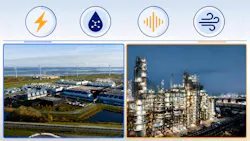
Summary: Hyperscale data centers are moving into the same communities as chemical plants, competing for grid capacity and water permits. Russell compares the two across power demand, cooling water chemistry, noise and air emissions. One striking figure: Meta's planned 5-GW Louisiana campus, at full load, would use nearly 30% as much electricity as the entire U.S. chemical sector buys each year. He closes with practical steps for plants facing a new hyperscale neighbor.
Why click: If a data center scouts your community, you could be competing with it for power and water, and this article shows how to prepare.
2. New U.S. Customs and Border Protection Rule Could Upend Chemical Import Compliance
By Lynn L. Bergeson, Compliance Advisor columnist and managing director of Bergeson & Campbell, P.C. | Sept. 21, 2026 | 5 min read
Summary: On Sept. 2, CBP issued an advance notice of proposed rulemaking on heightened supply-chain visibility for imports, following Executive Order 14411. Options include detailed production information, foreign export documentation, tracing technologies and expanded CTPAT requirements. Bergeson says the chemical industry, which by some estimates imports more than $400 billion in products, has paid little attention so far. Comments are due Dec. 1.
Why click: Importers could face far heavier due diligence and documentation duties, and this is the window to weigh in before the rule is drafted.
3. Small Modular Nuclear Projects Advance Amid Supply Chain Challenges
By Jonathan Katz, executive editor, Chemical Processing | Sept. 8, 2026 | 7 min read
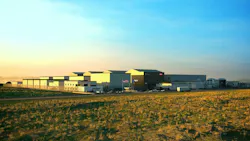
Summary: Dow and X-energy's Seadrift, Texas, project is advancing. DOE funding has reached $2.1 billion, NRC's environmental review found no significant impact, and Dow expects a construction permit by year-end. Katz examines the obstacles behind the milestones: a thin nuclear supply chain, HALEU fuel needs, shortages of qualified welders and inspectors, and pushback from an intervening environmental group. First-of-a-kind projects like this one may set the pace for SMRs across the chemical sector.
Why click: This is a real-world test case for nuclear power at a chemical site, and the NRC public hearing was Sept. 22, with comments open through Oct. 6.
4. When 'Simple' Repairs Aren't So Simple
By Andrew Sloley, Plant InSites columnist and Chemical Processing contributing editor | Sept. 2, 2026 | 4 min read
Summary: Replace-in-kind repairs are supposed to be the easy path back to normal operation, but Sloley shows how quickly that can change. In his example, a plant needed new equipment that added weight to a 1950s-era foundation, and no one could agree on what "no material change in loads" meant, including the local regulator. The team matched the new equipment's weight to the pound to hold its turnaround date. His lesson: involve experienced specialists early.
Why click: In four minutes, you'll learn how a "simple" fix can turn into a schedule-driving problem.

5. With OSHA Barely Watching, Who's Auditing Your Safety?
Process Safety with Trish & Traci podcast | Host: Traci Purdum, editor-in-chief, Chemical Processing | Guest: Trish Kerin, director of Lead Like Kerin and Chemical Processing Stay Safe columnist | Sept. 15, 2026 | 13 min read (with transcript)
Summary: With federal OSHA at roughly 1,700 inspectors for 12 million workplaces, a facility might see a full inspection once every 191 years, so self-regulation is now the whole system. Kerin explains normalization of deviance and why "no incidents" doesn't prove controls are working. She outlines how cold-eyes audits between sites and the three lines of defense model keep programs honest. Her bottom line: good process safety drives reliability and profit.
Why click: You'll get practical ways to test your own safety program, plus a business case to bring to leadership.
6. Podcast: Reverse Osmosis — When It's Time to Ditch the Softener
Chemical Processing Distilled podcast | Host: Traci Purdum, editor-in-chief, Chemical Processing | Guest: Brad Buecker, senior technical consultant, SAMCO Technologies | Sept. 18, 2026 | 13 min read (with transcript)
Summary: Buecker explains when reverse osmosis beats sodium softening for boiler makeup water. RO can remove up to 99% of dissolved ions, cutting corrosion, scaling and blowdown. But success depends on raw water quality and reliable pretreatment, not a one-time snapshot test. He covers microbiological fouling, chlorine damage, normalization programs, cleaning triggers and design considerations, and warns against cutting corners on monitoring or operator training.
Why click: If you're weighing a switch from softening to RO, this covers the pitfalls to avoid before you spend the money.