I hate politics. The divisiveness. The mudslinging. I hate writing about politics even more. But at some point, I have to hold my nose and jump in. It becomes less about discussing politics and more about safety in regard to the chemical industry.
I usually play a game of left, right, center when it comes to news. I want to see how stories are being treated from all angles. There’s not much wiggle room to change the tilt of the alarming number of refinery fires since February 2026, roughly the same time the Iran war began.
My podcast co-host, Trish Kerin, director of Lead Like Kerin and former director of the IChemE Safety Centre, suggested we chat about the increase in safety incidents for an episode of Process Safety with Trish & Traci. Boiling down that conversation, the gist is that global refining capacity is being pushed harder than usual. Demand is high, margins are tight and many facilities are aging, making deferred maintenance and delayed upgrades more common and dangerous.
At the time we recorded the podcast, May 7, 2026, there were 11 refinery and fuel facility fires that occurred across four continents in roughly 60 days — from Chevron El Segundo in California to Shell Norco in Louisiana, Mexico's Olmeca Refinery (twice), Australia's Geelong Refinery and India's new HPCL facility.
Since then, more incidents have occurred. On May 8, an explosion and fire struck the Chalmette Refinery in Louisiana (operated by PBF Energy), and on May 11, the HF Sinclair refinery in Tulsa, Oklahoma, caught fire. A Pemex refinery in Oaxaca, Mexico, also caught fire around May 12.
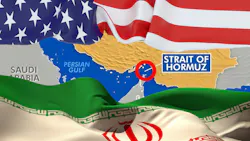
Chemical Processing’s sister brand, Oil & Gas Journal, has dedicated coverage of the Iran war, which is “having a significant impact on global oil markets, increasing volatility and raising concerns about energy supply disruptions. The oil supply disruption from the closure of the Strait of Hormuz, which carries a significant share of the world’s crude exports, remains a key concern for global energy markets and traders.”
The pressure is on. And with pressure comes uncomfortable decisions. One of the industry’s great thinkers, Trevor Kletz, had thoughts about risk and decisions. In the 1940s, Kletz was a chemical engineer at Imperial Chemical Industries. He became one of the founding fathers of modern process safety. He's best known for coining the concept of inherently safer design and for HAZOP methodology. His foundational work suggests that risk assessments are done by humans carrying biases. The concern is walking into a risk assessment where everyone already knows what the answer is going to be, because they know what the answer needs to be. Kletz spent decades arguing that accidents are caused by management decisions, not just operator error.
When crude prices rise, refinery margins narrow. Fixed costs like payroll don't decrease, so attention turns to cutting variable costs, and one of the first things on the chopping block is maintenance. Kerin noted that facilities "are perhaps being pushed beyond their limits" under supply chain disruptions and crude shortages.
She added that refineries are finely tuned to specific feedstocks. Change the crude mix and you get lower throughput, product quality problems and in the longer term, unintended accelerated corrosion that introduces new safety risks entirely.
What Kletz theorized decades ago is now playing out before our eyes: Facilities drift into accepting risk incrementally — each small deviation from procedure seems manageable in isolation, but they compound. Deferred maintenance isn't one decision; it's a thousand small ones that each felt survivable.
The myriad fires aren't a coincidence. They're where a pre-existing industry downcycle meets geopolitical shock meets deferred maintenance meets maximum production pressure. Each factor alone is manageable; together, they're combustible.
Kletz is no longer around to source answers, but Kerin offers a humble solution: “Talk to your people. Your operators and maintainers are the ones who actually know what's happening out in the field. . . . Ask them which controls they think are degrading right now. They can help you navigate how to operate safely in the current economic climate.”
About the Author
 Traci Purdum
Traci Purdum
Editor-in-Chief
Traci Purdum, an award-winning business journalist with extensive experience covering manufacturing and management issues, is a graduate of the Kent State University School of Journalism and Mass Communication, Kent, Ohio, and an alumnus of the Wharton Seminar for Business Journalists, Wharton School of Business, University of Pennsylvania, Philadelphia.
Recent Awards:
2025 Eddie Award for her column "Lax Regulations Burn Rivers"
2024 Jesse H. Neal Award for best podcast Process Safety with Trish & Traci