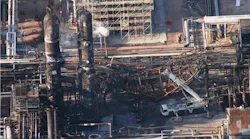
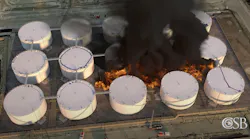
CSB Video Highlights Need for Remote Isolation at Chemical Facilities
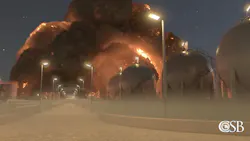
The U.S. Chemical Safety and Hazard Investigation Board (CSB) released a safety video Nov. 12 urging chemical facilities to make greater use of remote isolation equipment. Titled "RIPE for Change," the video examines three major chemical incidents in which the lack of remotely operated isolation devices contributed to the escalation of fires.
The incidents include the March 2019 fire at the Intercontinental Terminals Co. (ITC) bulk liquid storage terminal in Deer Park, Texas; the June 2019 fire and explosions at the Philadelphia Energy Solutions refinery; and the November 2019 fire and explosions at the TPC Group chemical plant in Port Neches, Texas.
The CSB found that fires at all three facilities burned for extended periods, ranging from several days to more than a month, partly because operators could not safely stop the flow of hazardous materials feeding the fires. The facilities relied on manual or locally controlled valves that personnel could not safely access during the emergencies.
Remote isolation equipment allows operators to shut off material flows by activating valves from a safe location. Systems also can be designed to activate automatically during certain emergency conditions.
The new video revisits findings from the CSB's July 2024 safety study, which recommended that the American Petroleum Institute (API), U.S. Environmental Protection Agency (EPA) and Occupational Safety and Health Administration (OSHA) strengthen industry guidance and federal requirements for remote isolation.
Why it Matters
The CSB's recommendations address the need to evaluate remote isolation during process hazard analyses and other safety reviews, particularly for equipment and storage vessels containing significant quantities of flammable, corrosive or toxic materials.
There has been some progress since the recommendations were issued. API published the third edition of its Recommended Practice 553, Refinery Valves and Accessories for Control and Safety Instrumented Systems, in May 2026, adding and strengthening requirements for emergency block valves. The CSB subsequently closed its recommendation to API, citing acceptable action. Its recommendations to EPA and OSHA to incorporate remote isolation evaluations into their respective Risk Management Program and Process Safety Management requirements remain open.
The video does not establish new regulatory requirements, but the CSB is encouraging facilities to evaluate remote isolation needs and install equipment where personnel can safely activate it.
The release follows another recent CSB safety video examining the September 2022 fire at the BP-Husky refinery in Oregon, Ohio, which killed two workers. Released Oct. 2, that video highlighted alarm flooding, abnormal operating procedures and inadequate safeguards against liquid overflow.