CSB Finds Engineering, HMI Issues in Shell Furnace Explosion
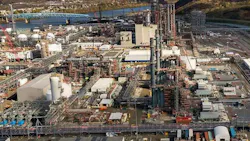
The U.S. Chemical Safety and Hazard Investigation Board (CSB) has released its final report on a June 4, 2025, explosion and fire at Shell Polymers Monaca in Pennsylvania, identifying deficiencies in engineered safeguards, administrative controls and human-machine interface (HMI) design as contributing factors.
The incident occurred when flammable cracked gas backflowed into the firebox of Furnace 5, an ethane-cracking furnace, and ignited. The explosion severely damaged the furnace and resulted in the evacuation of 15 employees. Shell estimated approximately $95 million in property damage and the release of about 5,100 pounds of ethylene and combustion products. No employees were killed or seriously injured.
The CSB determined that the immediate cause was the inadvertent simultaneous opening of two motor-operated valves used to isolate the furnace. The resulting flow path allowed cracked gas to enter the firebox, where it contacted lit pilots.
The agency identified several contributing factors, including the assignment of a process control engineer who had not previously performed the task and had limited process knowledge, reliance on administrative controls and an HMI design that made it difficult to distinguish among similar furnace valves.
The CSB found that Shell's process hazard analyses had identified cracked-gas backflow as a potentially fatal hazard, but the facility had not configured available engineered controls to prevent backflow while the furnace was in a double-isolation state. Instead, Shell relied on 11 administrative controls that depended on workers and managers following procedures.
The agency also found that the HMI displayed three nearly identical valves on a single logic screen, with identification tags that differed primarily by their final digit. The CSB said the design contributed to the inadvertent opening of the wrong valves.
The CSB issued two recommendations to Shell. The first calls for the company to review hazard analyses for potentially catastrophic scenarios that rely solely on administrative controls and implement inherently safer designs or engineered safeguards where appropriate.
The second recommends that Shell, using input from the technology licensor and recognized industry practices, implement and maintain an engineered control to prevent cracked gas from backflowing into a furnace during all modes of operation.
“This serious incident highlights the importance of ensuring that the personnel who are assigned to critical tasks actually have the experience to do them, as well the need to have a process control system that is easy to understand and clearly communicates essential information to the people operating it,” CSB Chairman Steve Owens said in a statement.
The CSB's full investigation report provides additional details on the incident sequence, furnace isolation and the agency's findings.
Why it Matters
The Shell report comes amid a series of recent CSB investigations examining how equipment condition, operating procedures and engineered safeguards interact in preventing catastrophic process incidents.
In August, the CSB reported that an inspection of a storage tank at Nippon Dynawave Packaging's pulp and paper mill in Longview, Washington, had identified significant tank-wall thinning months before the tank catastrophically failed. The May 2026 failure released approximately 900,000 gallons of hot, highly caustic white liquor, killing 11 workers and seriously injuring three others. The investigation remains ongoing.
The two investigations involve different hazards, but both examine whether identified process risks were adequately addressed before an incident. The Shell report specifically emphasizes the use of engineered safeguards for catastrophic scenarios rather than relying solely on administrative controls.
The CSB also recently released a safety video revisiting its investigation of a 2021 liquid-nitrogen release at Foundation Food Group's poultry processing plant in Georgia. The incident killed six workers and seriously injured three others, with the agency highlighting findings involving single-point failures, atmospheric monitoring and alarms, emergency preparedness, process safety management and product stewardship.