Axens Expands Project Collaborations for SAF, Industrial Electrification
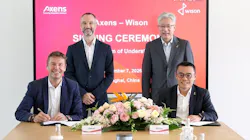
Axens recently announced two collaborations focused on applying its process technologies to lower-carbon industrial projects, including sustainable aviation fuel (SAF) production and electrification of refinery heating.
Axens and Wison Engineering signed a memorandum of understanding to explore collaboration on global SAF and electro-sustainable aviation fuel (eSAF) projects, including those using Fischer-Tropsch technology. The companies will evaluate project-development and execution approaches combining Axens’ process technology with Wison’s engineering, modularization, supply-chain integration and project-execution capabilities.
The companies said the collaboration will support selected SAF project developers with strategies intended to improve cost and schedule predictability, streamline early project development and advance projects toward final investment decisions. The work will include Axens technologies for reverse water-gas shift, Fischer-Tropsch synthesis and upgrading.
The agreement follows an April memorandum of understanding between Axens and Southern Energy Renewables covering a planned biomass-to-fuels project in Louisiana. Under that agreement, Axens is expected to provide technology licensing for carbon dioxide capture and conditioning and SAF production. Southern Energy said the project is designed to use regional wood waste to produce green methanol and carbon-negative SAF.
In a separate collaboration, Axens, Shell and Schneider Electric have installed an industrial-scale electric tubular heater at Shell’s R3 base oil project at the Shell Energy and Chemicals Park Rheinland in Germany. The companies said the installation is the first of its kind at industrial scale in Europe.
The electric heater is designed to replace conventional fired heating for base oil distillation and operate without direct carbon dioxide or nitrogen oxide emissions. Axens supplied its Heurtey Petrochem Solutions Electric Tubular Radiant Heater technology, while Schneider Electric provided a modular power system incorporating electrical distribution equipment, transformers and power controls.
The system is integrated with Shell’s existing site infrastructure and process-control systems. The companies said the project combines process technology, electrical engineering and automation to demonstrate electrified heating at industrial scale.
Shell is converting its Wesseling site as part of the R3 base oil project, while also pursuing other energy-transition projects at the Rheinland complex, including renewable-electricity-based hydrogen production and a bio-LNG facility.
Why it Matters
The announcements reflect two areas of process-technology development that are gaining attention: Fischer-Tropsch-based pathways for sustainable aviation fuel and electrification of industrial process heating. Recent Chemical Processing coverage has included an eSAF project using Fischer-Tropsch technology and a broader look at developments in electric process heating, providing additional context for these applications.