Could vs. Should: What 'Jurassic Park' Can Teach Us About Process Safety

As a proud Gen Xer, I often like to rewatch old movies from my school and college years. I recently rewatched the absolute classic "Jurassic Park." The film combined cutting-edge computer-generated imagery (CGI) with detailed, life-size animatronics for the dinosaurs. The movie has some iconic scenes, and many have been immortalized as modern-day memes — including the reclining Jeff Goldblum.
The movie features one specific quote from Goldblum's character, Dr. Ian Malcolm, worth exploring. Malcolm is a mathematician specializing in chaos theory who travels to the island at the invitation of the investors' lawyer to determine whether the park is safe. As someone skilled in analyzing complex systems, his pivotal line cuts to the heart of the film: "Your scientists were so preoccupied with whether or not they could, they didn't stop to think if they should." It is a line about consequences — particularly unintended ones.
Could We? Should We?
That quote struck a chord with me from a process safety perspective. In process safety, we can distinguish between two related concepts: compliance risk and conduct risk. Compliance risk asks, "Can we do this?" Conduct risk asks, "Should we do this?" Many activities and decisions are fully compliant with the law yet would not withstand public scrutiny — especially if something goes wrong. You can meet the minimum legal requirement and still see an incident occur. When the investigation is done, there will inevitably be instances where different decisions might have prevented it.
So, do we need to do more than just comply? In everyday life, we routinely go beyond compliance. If you have children, you ensure they receive schooling — that is compliance, it is mandatory. But many parents also enroll their children in after-school activities: sports, drama, clubs. There is no legal requirement to do so. Parents do it because it enriches their children's lives. They go beyond compliance because it is the right thing to do and provides real rewards.
Reframing the Question
When working with companies, I like to frame the concept with a simple question: "Have you done everything you can to manage this risk?"
The answer is likely no. Unless a risk has been fully eliminated — which is rarely achievable — there will always be something more that could be done. That leads to the next question: "If not, why not?"
This prompts a discussion about the controls in place and the alternatives considered. It is about rationalizing the decision and examining the compliance risk — determining whether the decisions meet legal requirements. But that is not where the conversation ends. I then ask one final question, somewhat tongue-in-cheek: "How does that answer sound if I add two words at the end — 'Your Honor'?"
If the justification for a decision does not hold up well in an imagined courtroom, it is time to revisit that decision. This is how we have meaningful conversations about conduct risk. Simply meeting the legal requirement does not prevent an incident.
Returning to "Jurassic Park": the likelihood of the T. rex escaping was assumed to be very low, given the park's complex security systems. But when those systems were sabotaged during a storm, every control failed. It could be argued that the team applied a degree of inherently safer design by cloning only female dinosaurs to limit population growth — but the safer step would have been not to clone dinosaurs at all. That was Dr. Malcolm's point. They were so preoccupied with whether they could that they never stopped to ask whether they should.
The next time you are deciding whether to implement an additional or different control for a process safety scenario, think about how that justification would sound to a judge. It may cause you to rethink your approach.
About the Author
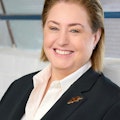 Trish Kerin, Stay Safe columnist
Trish Kerin, Stay Safe columnist
Director, Lead Like Kerin
Trish Kerin is an award-winning international expert and keynote speaker in process safety. She is the director of Lead Like Kerin Pty Ltd, and uses her unique story-telling skills to advance process safety practices at chemical facilities. Trish leverages her years of engineering and varied leadership experience to help organizations improve their process safety outcomes.
She has represented industry to many government bodies and has sat on the board of the Australian National Offshore Petroleum Safety and Environmental Management Authority. She is a Chartered Engineer, registered Professional Process Safety Engineer, Fellow of IChemE and Engineers Australia. Trish also holds a diploma in OHS, a master of leadership and is a graduate of the Australian Institute of Company Directors. Her recent book "The Platypus Philosophy" helps operators identify weak signals.
Her expertise has been recognized with the John A Brodie Medal (2015), the Trevor Kletz Merit Award (2018), Women in Safety Network’s Inaugural Leader of the Year (2022) and has been named a Superstar of STEM for 2023-2024 by Science and Technology Australia.