Disaster Planning in Process Plants: Best Offense is a Passive Defense
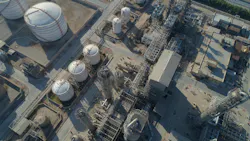
Public scrutiny over chemical plant safety will likely intensify amid global instability and a string of recent near disasters. Consider the incident this past May at an aerospace plastics plant in Garden Grove, California, where an unstable tank of methyl methacrylate triggered mass evacuations and a state of emergency for the surrounding community. Add the 2023 expiration of the Chemical Facility Anti-Terrorism Standards regulation in the U.S., along with newer technology threats like drones, and plants find themselves at a crossroads.
Active defense strategies often garner much of the attention due to their innovative, high-tech modes of protection. But a safety-by-design approach known as passive defense can prevent disastrous outcomes without a significant upfront investment. Passive defense covers the design, configuration and layout choices that protect plants from damage and production interruptions caused by security threats and other risks.
Unlike active defense, which depends on personnel, sensors and equipment to detect and respond to a threat as it unfolds, passive defense relies on decisions made long before any incident occurs. In today's environment, where plants face everything from cyberattacks to extreme weather to deliberate sabotage, these upfront design choices often determine whether a facility survives an event with minimal disruption or incurs extensive damage and a long shutdown.
Despite the protection they offer, passive-defense provisions are often overlooked in plant design. Most of these measures are inexpensive and straightforward to implement, yet they can prevent operational interruptions and facility damage. A few examples of passive defense strategies include the use of landscaping to hide or camouflage the facility, strategically placed spare equipment and fire-protection measures, including the use of fire-resistant walls around higher-risk operations.
Layout, Arrangement, Separation and Dispersion
Dispersion, separation and isolation of equipment and facilities have always served as important passive-defense tactics, and the extent of dispersion depends on a plant's size and layout. Dispersion involves the distribution of equipment and items over a wider area to minimize vulnerability to a major disruption.
Layout and distances between units function as critical passive-defense measures. Simulation tools can help organizations determine sufficient distances between equipment by factoring in the potential for damage from a blast, fast-spreading fire or structure collapse. The distances also depend on operational details of each unit, including the amount of flammable materials it uses and the nature of operation. Longer distances are always better to avoid damages by a fire or blast.
Sufficient distances are always better to avoid damages by fire and blast. The overall configuration of equipment determines how much damage a plant sustains during an extreme event and how long production stays interrupted afterward. A plant becomes more vulnerable when its allocated area is too small and equipment sits close together. As a rule, facilities spread across a vast area with ample margins withstand extreme events, such as earthquakes, explosions and fires better than facilities packed into compact, multilevel structures close to each other.
Camouflage, Hiding and Deception
The use of natural or artificial camouflage can reduce the likelihood of detection by hiding facilities from potential threats. Natural camouflage might include live plants, such as trees, while paint can help blend a facility into its environment. The camouflage pattern and methods vary according to geographic location and environment. It’s good practice to consult camouflage specialists on the best color scheme for facilities and equipment based on the surrounding environment.
Homogenization, or blending units and buildings into the surrounding area, is another important camouflage strategy. Anything that is not compatible with the environment draws attention, so it's important to make finished facilities and units as coherent with their surroundings as possible. For example, a storage tank or building painted green might be harder to see from far distance near a forested area.
Deception is another passive-defense tool. This involves changing the appearance of a facility or piece of equipment to remove the threat or danger it faces. For instance, if a pumping station for an underground pipeline is designed like a simple barn or low-profile warehouse, it will be less conspicuous.
Protection, Spare and Duplication
In some cases, you may want to have duplicates of key equipment and piping, within reasonable limits, as backups. It’s important to install a spare unit far enough from the original to prevent an event or attack from destroying both. The distance should be far enough to avoid damage from a fire or blast. For example, in some larger plants, two groups of fire-water pumps are located in separate corners of the plant. Protect key piping and cables by running them underground or through channels, whenever possible. The same approach can apply to key equipment by running underground pumping stations, canals, storage tanks and reservoirs.
The total length of key service lines, whether piping, cable or other types, should be as short as possible. Electric motors, switchgear and control systems are particularly vulnerable to blast, fire, falling debris and flooding.
Key machinery, such as compressors, large or critical pumps, tends to be expensive and slow to replace, so particular attention should go toward large equipment. Resupply can take several months or even a year or more, which makes this machinery an attractive target and a major consideration in any passive-defense plan. These items need special protection measures, generally including a contingency plan such as an operating spare installed as far from the original as possible. Each case should be considered on its own merits. For a plant with a power generation unit, for example, a spare capability to draw electrical power from an independent utility source might be a good option.
Passive Fire Protection
The spread of fire can cause considerable damage following a natural disaster, such as a fire triggered by a massive earthquake, an explosion or blast, or an attack. Fire spread is often more destructive than the initial explosion or blast, which is momentary and local in its effective range. Fire, by contrast, can spread over a prolonged period and cause extensive damage, which is why fire-protection systems play a major role in preventing losses in these cases.
Passive fire protection is one of the key tool sets within general passive defense. In simple terms, it aims to contain fires or slow their spread through measures, such as fire-resistant walls, floors, doors and dampers.
Passive fire protection includes compartmentalizing the building, enclosures and other areas using fire-resistance-rated walls and floors. Organizing the plant into smaller fire compartments, each consisting of one or a few areas or rooms, prevents or slows the spread of fire from its point of origin to other spaces, limiting damage and providing more time for firefighting or emergency evacuation. These measures are intended to contain a fire within its compartment of origin, limiting the spread of fire and smoke for a period set by fire codes. Depending on requirements, passive systems can provide fire ratings exceeding 120 minutes. Fire dampers, such as fire-resistive closures within air ducts, must actually move and close to be effective. Although many of these active-protection systems are tested and certified, there is a small risk that they won’t work when needed. The preference is always to use passive systems. The active and actuated protections, such as fire-resistive closures, should be used if passive measures are not sufficient for the application.
Fire-protection systems typically aim to keep the protected side of a barrier at or below 140°C for walls, floors and electrical circuits requiring a fire-resistance rating, or below 550°C for steel structures and supporting members. The latter is the critical temperature for structural steel, above which it risks losing its strength and collapsing.
Optimum Passive Defense
Optimum passive defense weighs measures against threats and dangers to a plant or facility against the trade-off between investment cost and security. The optimal allocation of defense resources depends on the plant's structure, the cost-effectiveness of protection investments and passive-defense provisions, and the adversary's goals and constraints. As a very rough indication, the cost of an attack against a given facility increases linearly with the amount of defensive investment in that facility.
In general, a defender allocates defense provisions across a collection of locations, while an attacker chooses one or a few locations to attack. Because the defender allocates resources centrally rather than in a decentralized manner, the optimal allocation of resources can, in theory, be non-monotonic.
Human Factors, Training and Information Systems
Passive-defense measures exist to protect facilities, property and human resources alike. Operators, specialists and staff in a plant are valuable assets that should be protected along with key equipment and facilities.
Human factors matter greatly in passive defense. Operators, the engineering team and maintenance staff should work closely together to implement passive-defense measures effectively. As with safety, passive defense should be everyone's responsibility. A coherent, integrated team working closely together with a strong sense of shared responsibility is a major asset to any passive-defense plan, and team members should look out for one another during a crisis, accident or natural disaster.
Training is an important part of passive defense. Plants should invest in staff and operators through training, education and exercises geared toward passive-defense tasks. The types of threats and potential attacks change over time, and newer threats such as cyberattacks require up-to-date education and training for staff to counter them effectively.
Protecting critical information, data and the systems that hold them is a major task within passive defense, since this information could be used to damage the plant or facility. Cyberattacks are common today and preventing them is an important part of any passive-defense plan.
Crisis Management
Crisis management is an important topic related to passive defense. Key points include:
- Advance preparation for crisis and emergency. Plants should have established procedures and guidelines for each type of threat, along with measures, plans and tools ready in advance so the team can react quickly and efficiently.
- Reducing damage. Plants should have a proper plan for reducing and minimizing damage in each type of crisis, threat or event.
- Team readiness. A culture of passive defense and crisis management should be built into the team.
- Rapid return to normal conditions. A key goal during a crisis is returning to normal operation and full production capacity as soon as possible.
- Reconstruction and repair. Plants should establish procedures for reconstruction and repair of damage in advance, including details such as the number of additional staff, machinery and tools required and locations for temporary accommodation for that staff.
Too often, plants and facilities affected by natural disasters or extreme events have had no such preparation in place. Many crises, disasters and attacks have been handled ineffectively, without adequate active or passive defense measures, and crisis management in these cases has been poorly trained and poorly executed.
About the Author
 Amin Almasi
Amin Almasi
rotating equipment consultant
AMIN ALMASI is a mechanical consultant based in Sydney, Australia. He specializes in mechanical equipment and offers his insight on a variety of topics including pumps, condition monitoring, reliability, as well as powder and fluid handling and water treatment.