Engineering 101: The Hidden Utility Driving Chemical Plant Performance
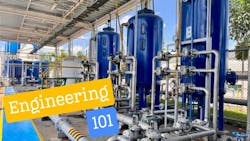
In chemical production, air treatment matters. Proper dryers and filters prevent moisture, oil and particulates from stalling lines, compromising quality, cutting production uptime and inflating energy use.
Here are some common questions and why these often-overlooked components deserve more attention in chemical production.
Q: Why is compressed air so critical to chemical production processes?
A: Think of compressed air as the plant's invisible utility. It moves powders and resins, helps with aeration and mixing, keeps equipment clean and dry, and it's the muscle behind instrument air for valves and actuators. In some cases, it even supports combustion. Take that away, and you risk quality drift, process hiccups or outright stoppages.
Q: What risks are chemical plants most exposed to if air quality isn't properly managed?
A: The big three are safety, quality and waste. Moisture, oil, and particulates corrode valves, foul membranes, and poison catalysts, pushing product out of spec and introducing hazards. You also pay for it on the power bill. When air is dirty or wet, teams crank up pressure to push through restrictions. Every extra 2 psi is about 1% more compressor power, and clogged filters or wet air keep compressors and dryers running longer than they should.
Q: What challenges do plants face with dryers and filters in particular?
A: Chemical plants are tough on air systems. You're dealing with high humidity, corrosive atmospheres and tight purity targets. If a desiccant bed is undersized or spent, your dewpoint drifts. Coalescing filters load up and pressure drop climbs. In oil-free zones, even a trace of hydrocarbons is a problem. And every avoidable pressure drop costs money because the compressor has to work harder to hold setpoint.
Q: How does maintenance or incorrect sizing affect reliability and efficiency?
A: A lot more than people think. If the compressor or dryer is the wrong size, it short cycles, runs hot and wears out early. If headers are starved or filters are clogged, you get chronic pressure loss, so operators bump up setpoints and burn power. Skip drain checks or run on saturated media, and you'll see nuisance trips, drifting instruments and eventually unplanned downtime in continuous service.
Q: Are there regulations or standards chemical manufacturers must meet?
A: Most sites work to ISO 8573-1 for particulates, water and oil. OSHA sets the guardrails for safe use around instrumentation. EPA frameworks influence how large utilities manage energy and emissions. Good treatment, along with documented checks, makes compliance easier and supports quality and EHS programs.
Q: What solutions or approaches are recommended for chemical facilities?
A: Start with the purity class you really need, then design backward. Often that means efficient oil-free compression with smart controls, a desiccant dryer sized for seasonal swings and layered filtration with low initial pressure drop and easy element changes. Add the basics — proper drains, regulators and differential pressure monitoring. Wrap it in a service plan that includes leak audits and dewpoint checks to keep performance steady.
Q: How can compressed air management help reach sustainability and decarbonization targets?
A: Compressed air is a big electric load, so it's a direct lever on Scope 2. Right-sizing, fixing leaks, optimizing pressure and cutting pressure drop all lower kilowatt-hours. Smarter controls match supply to demand and trim CO2 emissions. Avoiding over-drying saves energy without risking quality.
Q: Final advice for chemical manufacturers looking to protect operations?
A: Treat compressed air like the fourth utility. Define the purity you need, size the system right, watch dewpoint and differential pressure, and keep up with maintenance. Small steps pay back fast, and the right distributor partner helps lock in uptime, product quality and energy savings.
About the Author
 Aneek Roy
Aneek Roy
Aneek Roy is director of the Regional Project Management Office at ELGi North America. He leads cross-functional programs that connect product planning to real-world applications and field execution. Aneek has held previous roles in product management and marketing within ELGi, giving him a practical focus on reliability, air treatment and right-sizing. Through ELGi and its subsidiaries Pattons, Pattons Medical and Michigan Air Solutions, he supports customers across the region with guidance on dew point control, filtration and energy performance.