Brazil Tariffs Threaten U.S. Chemical Reshoring Push, ACC Warns
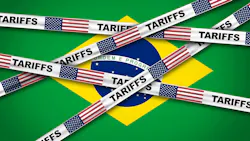
The Trump administration’s 25% tariff on certain Brazilian imports could put U.S. chemical industry reshoring initiatives at risk, said the American Chemistry Council in a statement released after the July 15 executive order.
“ACC is concerned that broad tariffs on imports from trusted trading partners like Brazil could make it more difficult to reshore and friend shore supply chains closer to home especially when faced with more significant unfair trading practices from other countries,” ACC stated.
The tariffs impact a wide range of chemicals, particularly ethanol and many materials used outside the pharmaceutical sector.
These broad, untargeted tariffs could raise costs across downstream sectors, such as energy, plastics and manufacturing, and put recent U.S. reshoring efforts that relied on Brazilian raw materials at risk, according to a July 1 letter from Jason Bernstein, ACC's director of international trade and supply chain, submitted to the U.S. Trade Representative (USTR) on its proposed action.
Instead of strengthening U.S. supply chains, the tariffs could make it cheaper for chemical manufacturers to abandon domestic production and import finished chemicals from other countries using China-sourced raw materials, the letter stated.
“This would weaken U.S supply chain resilience and increase U.S. dependence on less balanced and strategically aligned partners,” the letter stated. “We therefore would express caution in implementing these proposed tariffs and request USTR to establish a review procedure to identify and address these and similar unintended consequences before such tariffs are implemented.”
ACC stated it was pleased to see an expanded list of exemptions from the tariffs from the initial proposal. The list includes a broad range of chemical and petrochemical raw materials that are unavailable domestically or in insufficient quantities, such as aluminum hydroxide (see the full Federal Register list).
The Trump administration contends that for decades Brazil’s trade policies and practices have unfairly harmed U.S. farmers, workers, innovators and businesses, while restricting access to Brazil’s consumers.
The administration specifically cited Brazil’s lower tariffs on imports from Mexico and India, weak anti-corruption regulations, lax intellectual property protections and a failure to reciprocate the U.S. favorable treatment of Brazilian ethanol as key reasons for the 25% fee.
Imports of U.S. ethanol into Brazil have declined since Brazil reinstated its ethanol tariff, according to USTR. In 2025, U.S. ethanol exports to Brazil totaled $96 million, an 87% decrease from the peak export value of $761 million in of 2018.
About the Author
 Jonathan Katz
Jonathan Katz
Executive Editor
Jonathan Katz, executive editor, brings nearly two decades of experience as a B2B journalist to Chemical Processing magazine. He has expertise on a wide range of industrial topics. Jon previously served as the managing editor for IndustryWeek magazine and, most recently, as a freelance writer specializing in content marketing for the manufacturing sector.
His knowledge areas include industrial safety, environmental compliance/sustainability, lean manufacturing/continuous improvement, Industry 4.0/automation and many other topics of interest to the Chemical Processing audience.
When he’s not working, Jon enjoys fishing, hiking and music, including a small but growing vinyl collection.
Jon resides in the Cleveland, Ohio, area.