BASF Opens Refinery Catalyst R&D Center in Georgia
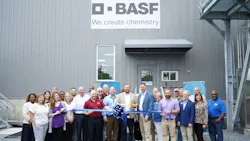
BASF opened a new research and development center for refinery catalysts at its Attapulgus, Georgia site on May 18, co-locating applied research operations with the company's largest refinery catalyst production facility globally.
According to BASF, the center focuses on product development and fluid catalytic cracking catalyst testing, with the proximity to production operations intended to shorten innovation cycles and improve collaboration between R&D, process engineering and manufacturing teams. The facility also includes quality assurance and quality control laboratories.
Fluid catalytic cracking is a core refinery process that uses catalysts and heat to convert heavy oil and alternative feedstocks into lighter, higher-value products including gasoline, liquefied petroleum gas and olefins.
"As an extension of BASF's R&D Verbund, Attapulgus will harness world-class knowledge and capabilities, paired with advanced digital tools, to address the needs of the global customer base of BASF's refinery catalysts business," Marius Vaarkamp, Global R&D Director Refinery Catalysts at BASF said in a statement. "The proximity of the R&D Center to our operational teams will ensure that we continue to deliver solutions that drive refinery performance and create lasting value for our partners globally."
The Attapulgus investment reflects broader momentum in chemical industry R&D, where AI and digital tools are increasingly being integrated into research workflows. DuPont recently announced a collaboration with Uncountable, an AI platform for product development, to standardize experimental data and improve formulation design and optimization as part of what the company describes as an "AI-ready labs" initiative.
"High-quality, structured data is critical to achieving innovation excellence at scale — enabling advanced analytics, machine learning, and AI to accelerate delivery of solutions to our customers," said Marty DeGroot, DuPont's chief technology officer, in a statement.
However, a recent analysis of AI adoption in chemical R&D found that 67% of R&D decision makers at leading companies report dissatisfaction with the pace of AI implementation, with fewer than half of scientists surveyed agreeing that AI tools accurately answer scientific questions most of the time. The analysis identified key barriers, including the structural complexity of chemical data, the pace at which scientific knowledge evolves relative to model training cycles and the organizational competencies required to deploy AI effectively at scale.
About the Author
 Amanda Joshi
Amanda Joshi
Managing Editor
Amanda Joshi has more than 18 years of experience in business-to-business publishing for both print and digital content. Before joining Chemical Processing, she worked with Manufacturing.net and Electrical Contracting Products. She’s a versatile, award-winning editor with experience in writing and editing technical content, executing marketing strategy, developing new products, attending industry events and developing customer relationships.
Amanda graduated from Northern Illinois University in 2001 with a B.A. in English and has been an English teacher. She lives in the Chicago suburbs with her husband and daughter, and their mini Aussiedoodle, Riley. In her rare spare time, she enjoys reading, tackling DIY projects, and horseback riding.