BASF, NOD Apiary Products Expand Collaboration on Honey Bee Health
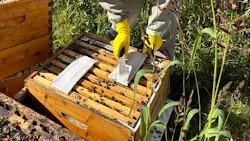
BASF and NOD Apiary Products, a Canadian honey bee health company based in Trenton, Ontario, announced a collaboration on May 14 focused on advancing honey bee health through technical cooperation and funding support tied to formic acid-based hive treatment technologies.
According to the companies, the collaboration builds on an existing supplier relationship in which BASF provides formic acid used in NOD Apiary Products’ Formic Pro treatment, which is designed to help beekeepers manage parasitic mites that threaten honey bee colonies.
Formic Pro is applied directly within the hive using strips manufactured from BASF’s ecoflex and ecovio certified compostable materials. The companies said the strips are designed to provide controlled release of formic acid vapor capable of penetrating brood caps to disrupt mite reproduction while supporting sustainability-focused hive management practices.
The collaboration also incorporates expertise from BASF’s Intermediates, Performance Materials and Agricultural Solutions businesses, according to the announcement.
“Healthy pollinators are essential to agriculture and food production,” said Lauren Grech in a statement. “By working closely with NOD Apiary Products, BASF is helping advance solutions that support beekeepers and help protect honey bee colonies.”
Dr. Heather Broccard-Bell said BASF’s support and materials expertise help the company continue developing science-based technologies for the beekeeping industry.
According to the press statement, honey bees contribute significantly to agricultural production through crop pollination, and the companies said the collaboration is intended to support more resilient food systems and long-term pollinator health.
The announcement follows other recent BASF investments involving formic acid production and energy efficiency infrastructure. In April, BASF installed a 95-ton evaporator at its Ludwigshafen Verbund site in Germany as part of an industrial heat pump project designed to generate carbon dioxide-free steam for manufacturing operations.
According to BASF, the industrial heat pump system — being developed with GIG Karasek — will use renewable electricity and waste heat from steam cracker cooling processes to generate up to 500,000 metric tons of CO2-free steam annually. The company said the steam will primarily support formic acid production and could reduce greenhouse gas emissions tied to the process by as much as 98% once operations begin in 2027.