Covestro Launches Major Energy Efficiency Project at Germany Site
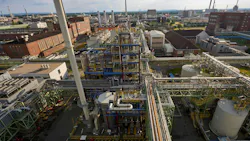
Covestro, headquartered in Leverkusen, Germany, announced plans to install a new steam compressor at its Dormagen, Germany site in what the company describes as its largest energy efficiency investment to date. The project involves a low-double-digit-million-euro investment, with construction scheduled to begin later this year and the compressor expected to go into operation in mid-2027.
According to the company, the compressor operates on a heat pump principle, capturing waste steam generated during the production of toluene diisocyanate (TDI) — a component used in flexible polyurethane foam — and raising it to a higher temperature and pressure level suitable for reuse in other production processes.
Covestro said the project is expected to save a low three-digit gigawatt-hour volume of energy per year and reduce CO2 emissions by more than 40,000 tons annually, representing a 2% reduction in the company's total energy consumption in Germany compared to 2025 levels.
"Energy efficiency is a key lever for transforming our production towards climate neutrality and a circular economy," Covestro CTO Thorsten Dreier said in a statement. "That's why we're using every opportunity to make our production even more energy-efficient with modern, innovative process technologies."
According to the company, the Dormagen compressor project follows the installation of an energy-efficient reactor at the plant last year. Covestro said it reduced overall energy consumption by approximately 40% between 2005 and 2022 and is targeting a 20% reduction in energy consumption per ton of product produced by 2030 compared to 2020 levels.
The Dormagen announcement follows a capacity expansion earlier this year at Covestro's TDI production facility in Shanghai, China, where a debottlenecking project increased annual output from 310,000 to 370,000 metric tons. According to the company, the project optimized existing production processes and infrastructure rather than adding new production lines.