Global Impact Coalition Pilot Tests Automotive Plastics Recycling, Issues Report
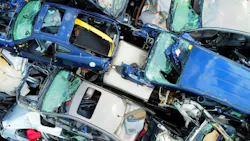
The Global Impact Coalition (GIC) has published findings from an automotive plastics circularity pilot in which eight chemical and materials companies collaborated to recover and process plastic from 100 end-of-life vehicles, confirming technical feasibility while identifying economics and supply chain coordination as the primary barriers to commercial scale.
The participating companies — BASF, Covestro, LG Chem, LyondellBasell, Mitsubishi Chemical Group, SABIC, SUEZ and Syensqo — processed the vehicles through a full dismantling, shredding and sorting chain, recovering approximately 8 metric tons of plastic from vehicles of varying ages, makes and conditions. According to the GIC, the pilot demonstrates that plastic components can be recovered from end-of-life vehicles and processed into material suitable for recycling, but that a commercially viable value chain framework does not yet exist.
In the report's foreword, GIC CEO Charlie Tan noted: "Closing the loop on automotive plastics is no longer a question of ambition, it is a question of execution."
According to GIC, more than 800,000 tons of plastic from end-of-life vehicles are incinerated or landfilled in Europe annually. The coalition said the primary barriers to scale are not technological but rather related to coordination and economics across the value chain, including original equipment manufacturers, dismantlers, waste management companies and chemical producers.
The findings carry regulatory significance. Under new EU requirements, new cars must contain 25% recycled plastic by 2036, with at least 20% sourced from closed-loop vehicle recycling. The current closed-loop share stands at approximately 2.5%. According to GIC, the next phase of work will focus on economic viability through component-specific scenario modeling and further work on automation, chemical recycling and design for recycling.
The pilot results come as the GIC continues to expand its membership. In early April, technology company Siemens joined the coalition, with Fraunhofer Chemistry Alliance joining as an associate member in March. According to GIC, Siemens is expected to contribute industrial automation and digital technologies to projects including the automotive plastics initiative, while Fraunhofer will support development of scalable technologies and business models across the chemical sector. The additions follow the December 2025 addition of Henkel Adhesive Technologies and LG Chem's joining in January 2025 as the first Korean company in the coalition.