BASF Starts Up 3D-Printed Catalyst Production Plant in Germany
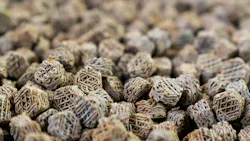
BASF has started up a production plant for 3D-printed catalysts at its Ludwigshafen, Germany site, scaling additive manufacturing technology to industrial levels.
According to the company, the facility produces catalysts using its X3D technology, which enables optimized geometries that improve reactor performance. BASF said the design reduces pressure drop while increasing active surface area, allowing higher throughput, improved product quality, and lower energy consumption compared to conventional catalysts.
The company said the technology has already been deployed in commercial applications. In 2025, a fine chemical producer used the catalysts in a sulfuric acid unit, achieving improved plant performance and increased production, according to BASF. The new plant is expected to expand availability of the technology and shorten development and commercialization timelines.
According to BASF, the 3D-printing approach can be applied across a range of catalyst materials, including precious and base metals as well as different support structures.
The startup follows other recent portfolio and operational changes. Last week, Silox agreed to acquire selected hydrosulfite-related assets from BASF, including intellectual property and production equipment. BASF also recently completed the sale of its optical brightening agent business and expanded dispersions capacity at its Durban, South Africa site to improve regional supply reliability.