BASF Reports 2025 Earnings Decline as China Site Ramps Up, Outlines 2026 Outlook
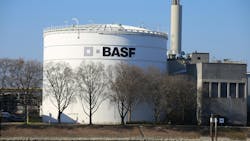
BASF SE reported 2025 financial results, highlighting progress on its “Winning Ways” strategy, startup of major plants at its Zhanjiang Verbund site in China and an updated operational outlook for 2026.
According to the company, EBITDA before special items declined to €6.6 billion (approximately $7.8 billion) in 2025 from €7.2 billion (approximately $8.5 billion) in 2024 amid what it described as an uncertain and volatile global market environment. Earnings in core segments including Chemicals, Industrial Solutions, Materials and Nutrition & Care were affected by lower margins, while standalone businesses such as Surface Technologies and Agricultural Solutions partly offset the decline.
The successful startup of major plants at the Zhanjiang Verbund site marked a key operational milestone in 2025. BASF expects carbon dioxide emissions in 2026 to range between 17.2 million and 18.2 million metric tons, with higher emissions primarily linked to the China ramp-up. The company said it plans to counter this through energy efficiency measures, process optimization and a continued shift toward renewable electricity.
BASF accelerated implementation of its cost savings programs, achieving an annual cost reduction run rate of about €1.7 billion by the end of 2025 and raising its target for the end of 2026 to €2.3 billion. The company also reduced its number of senior executives and adjusted staffing levels while recruiting personnel for the new China site.
For 2026, BASF forecasts EBITDA before special items between €6.2 billion and €7.0 billion (approximately $7.3 billion to $8.3 billion). The company expects improved earnings in Nutrition & Care and Chemicals, a slight increase in Industrial Solutions and lower earnings in Materials and Agricultural Solutions due to currency effects. Surface Technologies earnings are projected to decline due to positive one-time effects recorded in 2025.
In related operational updates, BASF recently announced it is increasing output at its 1,4-butanediol plant in Ludwigshafen to support regional supply in Europe. According to the company, the ramp-up leverages its integrated Verbund structure across the acetylene value chain to reinforce availability of downstream derivatives used in polymers, solvents and elastomers.
BASF also reported plans to expand dispersions capacity in Mangalore, India and to consolidate global business services to improve cost competitiveness and service delivery.