The Hose Inspection Gaps That Put Chemical Plants at Risk
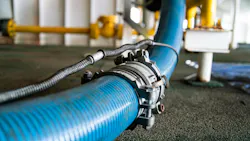
On May 5, 2021, a flexible hose ruptured while operators transferred oleum from a railroad tank car at the FutureFuel Chemical Co. facility in Batesville, Arkansas. About 73,300 pounds of the chemical escaped over 73 minutes, leaving an operator with severe chemical burns. In the published incident report from July 2025, the U.S. Chemical Safety and Hazard Investigation Board (CSB) found that the hose's inner fluoropolymer layer had been damaged, possibly by creep during nearly seven years in storage before installation. The acid then ate through the underlying structural layers.
The same CSB volume covered 30 incidents from April 2020 through January 2025, with two fatalities, 25 serious injuries and about $1.8 billion in property damage. Five occurred during truck or railcar loading and unloading, where hoses do most of the work.
Hoses are among the few pieces of process equipment that operators connect, disconnect, drag, bend and swap by hand every shift. They are also among the least documented. Many plants can pull a pressure vessel's inspection history in minutes but can't say when they last tested a given transfer hose or confirm it’s the hose specified for that service.
One of the company’s engineers who previously worked at a large power plant can personally relate to this scenario. During normal operation, no leaks were identified in the system. But after an extended maintenance outage, an oil line ruptured when the system returned to service with pressure. Luckily, there were no human injuries due to the hose failure, but there was significant cleanup and additional equipment downtime. The hose was inspected while the equipment was running during daily operator walkdowns and visually inspected during the maintenance downtime, but a failure still occurred when the system returned to service.
With fall turnarounds and year-end audits approaching, now is a good time for plant teams to closely examine four common gaps.
1. Inspections that stop at the cover
Most hose inspections are visual, and a visual check only sees the outside. The Batesville failure started on the inside, which is typical: chemical attack, liner permeation and braid corrosion begin under the cover and may be well along before anything shows.
Pre-use checks can't replace periodic hydrostatic testing at the pressure and frequency set by the hose manufacturer and by ARPM IP-11-7, the rubber products industry's manual for hose maintenance, testing and inspection.
The ends also get too little attention. Failures cluster near the couplings, where flexing concentrates and crimps or bands can loosen, so inspectors should closely examine the first 18 inches from each fitting. Hoses age on the shelf as well as in service, so track shelf time, set a maximum service life based on the manufacturer's guidance and your own failure history, and retire hoses on schedule. Hoses should be stored inside away from direct sunlight and in dry conditions. Inspect hoses when removing them from long-term storage to ensure there are no signs of premature aging or degradation.
The right hose in the wrong service
Misapplication of hoses and fittings is one of the most common sources of risk I see, and it rarely looks dramatic. A hose rated for one chemical ends up on another line because it was the right length. A replacement fitting threads on but is a different alloy. A spare pulled from the storeroom has no tag, and nobody verifies what it is.
Compatibility checks are also the step that often gets skipped under schedule pressure. In a March 2025 incident report, CSB described a December 2023 event at the Tradebe Environmental Services waste solvent facility in Bridgeport, Connecticut, where material was transferred into a storage tank without compatibility testing. The chemicals reacted, and a worker was seriously injured. The same check applies to every wetted component in the transfer path, starting with the hose.
The hose industry uses the acronym STAMPED to specify an assembly: Size, Temperature, Application, Media, Pressure, Ends and Delivery (testing and certification requirements). Any of them can be wrong, and the hose can still look right.
Closing this gap starts with a written specification for each hose service, kept with the assembly record: media and concentration, temperature range, working pressure, liner and reinforcement materials and end fittings. Check compatibility for every component, including the cover and fittings, at the actual concentration and temperature.
Every assembly should carry permanent identification that ties it to its spec and test records, so a hose can't drift into a service it wasn't built for. For critical services, verify materials on receipt. Positive material identification methods such as X-ray fluorescence can distinguish alloys that appear identical, such as 316L stainless steel and Hastelloy C-276 braid. For services where incompatibility is a risk, dedicate hoses and make swaps hard with color coding, service-specific fittings and labeled storage.
2. A program that lives in someone's head
An auditor, insurer or incident investigator will ask a few basic questions: What hoses do you have? What service is each in? When was each last tested, and who decided it was fit for use? If the answers depend on one technician's memory, the program won't hold up, and that technician may not be around much longer. A Deloitte and Manufacturing Institute study released in September 2026 counted nearly 500,000 manufacturing technician roles currently unfilled.
For facilities covered by the Occupational Safety and Health Administration's Process Safety Management standard, the mechanical integrity element requires inspection and testing that follows recognized and generally accepted good engineering practices, with documentation of that work. Many plants bring transfer hoses into that scope. The rules keep shifting: In February 2026, EPA proposed rescinding several 2024 additions to its Risk Management Program, including most third-party audit provisions. A well-documented hose program holds up under either version.
A solid program starts with an inventory: a unique ID for every assembly, with its location, service, specification and in-service date. Written procedures for inspection, pressure testing and removal from service should carry acceptance criteria drawn from ARPM IP-11-7, NAHAD's hose assembly guidelines and the manufacturer's instructions. Records for each hose show the date, inspector, test pressure, results and next due date.
Swapping a hose or fitting type should go through management of change, and anyone who inspects, installs or tags out hoses should have documented training. Log every leak, reject hose and early replacement, and use that history to adjust intervals and service life. Investigate hose failures through a standardized root-cause analysis process, and document findings and corrective actions.
3. Routine checks without a clear standard
A glance on the way past is not an inspection. Give plant teams a written checklist, the authority to tag a hose out without a debate, and one firm rule: Any defect takes the hose out of service until someone qualified evaluates it. Maintenance work orders need to be created in which technicians document what they find and how the issues are corrected.
Start with the tag: legible, matched to the service, current test date. On the cover, look for cuts, gouges or abrasions exposing reinforcement, along with cracking, blistering, soft spots, swelling or discoloration. Check the length for kinks, crushed sections and twisting, and on braided or metal hose, for broken wires, corrosion or braid separation.
At the fittings, look for corrosion, cracks, damaged threads or sealing faces, loose bands and any sign the hose is pulling out of the coupling. Shake the assembly by hand. Nothing should rattle. Confirm the installation keeps the bend radius within limits, avoids torque and rubbing, supports the hose's weight and stays clear of heat.
In 2023, an operator at Dow’s Texas City, Texas, plant suffered serious chemical burns when a loading hose was disconnected while it still held pressurized nitrogen and residual vinyl acetate. Verify every hose is depressurized and drained before anyone breaks a connection. In storage, keep hoses drained, capped, off the floor and away from sunlight, heat and ozone sources such as electric motors.
4. Ignoring the service history
Nothing on the outside of the Batesville hose would have warned an inspector about its damaged liner or the nearly seven years it spent in storage. A record of its age and service history could have raised the question before the first transfer. Plants that give hoses the same discipline they apply to vessels and piping, with written specifications, test records and retirement dates, give their teams that chance. Start with one high-hazard transfer service this quarter, pull the records for every hose in it, and see how many of the auditor's questions you can answer.
About the Author
 Trey Travis
Trey Travis is vice president of operations at Southeastern Hose, Inc., a third-generation, family-led manufacturer and fabricator of hose assemblies, expansion joints and related industrial solutions based in Bremen, Georgia. Having grown up in the family business and worked his way from the factory floor into executive leadership, he brings hands-on insight into manufacturing operations, inventory control, client relations and the realities of industrial business leadership. He holds a Bachelor of Business Administration from Auburn University.