Denmark Launches Europe's First Industrial-Scale Undersea CO2 Storage Facility
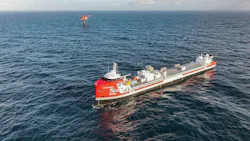
Copenhagen — Denmark's King Frederik X has officially opened an undersea carbon dioxide storage facility in the North Sea, in what organizers say is the first site in the European Union to store CO2 on an industrial scale.
The "Greensand" project is located at the decommissioned Nini West oil field and was inaugurated in the port city of Esbjerg on Friday.
Since 2023, the storage of CO2 has been tested at the site, with around 15,000 metric tons of liquefied carbon dioxide deposited annually at a depth of around 1,800 metres during the pilot phase.
In regular operation, up to 400,000 tons per year are to be transported to the disused oil platform and stored in the seabed.
The technology is known as carbon capture and storage (CCS) and works by capturing CO2 - for example during industrial processes - transporting it to an underground storage site and storing it there permanently.
Experts consider the method to be safe, though environmentalists have reservations, in part because they fear the technology encourages the removal of harmful greenhouse gases rather than their reduction in the first place.
A facility for the commercial storage of CO2 already exists off the coast of Norway. In the North Sea project off Denmark, British chemicals group INEOS is working with Harbour Energy and the state-owned Danish company Nordsøfonden.
EU Energy Commissioner Dan Jørgensen called Friday's launch an "important milestone for Europe." The project showed industry a way to continue its transition to a low-carbon future while maintaining production, investment and jobs on the continent, he said.
©2026 dpa GmbH. Distributed by Tribune Content Agency, LLC.