PVC Waste Converted into Lubricant Feedstock in New Recycling Process
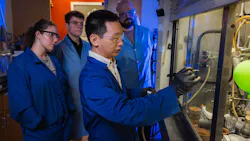
Virginia Tech researchers have developed a process that converts polyvinyl chloride (PVC) waste into polyalphaolefin, a key component of synthetic lubricants. The approach could provide chemical manufacturers with a route to turn difficult-to-recycle PVC into a higher-value product while reducing reliance on conventional lubricant production.
Led by Guoliang “Greg” Liu, a chemist and chemical engineer at Virginia Tech, the team developed a process that removes chlorine from PVC and breaks down the polymer into smaller molecules that can be used to produce lubricant oils. The research was published Aug. 5 in Nature.
The process places PVC in a solvent with aluminum trichloride and alpha-olefins and heats the mixture to 158°F for three hours. The resulting material is extracted as an oil with lubricant properties.
Researchers initially attempted to convert PVC into other functional molecules but found that the resulting materials were soft and difficult to use. The team then shifted its approach toward breaking the polymer chains into smaller segments that could mimic lubricant molecules.
Testing conducted with researchers at Texas A&M University found that the resulting oils could perform competitively with commercial lubricant products, according to the researchers. The team also worked with researchers at Caltech on chemical computations and with a Virginia Tech researcher to evaluate production economics and potential large-scale manufacturing.
The work builds on Liu's earlier research into converting other plastic wastes into surfactants such as soaps and detergents. The team is now focused on scaling the PVC-to-lubricant process and making the resulting lubricants more sustainable and accessible.