Lanxess Replaces Natural Gas with Hydrogen at German Pigment Plant
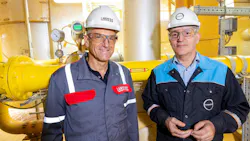
Lanxess, Cologne, Germany, has begun using hydrogen instead of natural gas to fuel the spray dryer at its iron oxide pigment production plant in Krefeld-Uerdingen, Germany. The company said the conversion will reduce carbon dioxide emissions by about 6,000 metric tons per year.
The project is among the first large-scale industrial applications in Germany to use hydrogen as a fuel in continuous operation, according to Lanxess. The company installed the hydrogen burner at the end of 2025 and gradually brought the system online.
The conversion required installation of a dedicated hydrogen pipeline, a hydrogen-compatible burner, measurement and control technology and additional safety and control systems. The system is designed to operate entirely on hydrogen.
The hydrogen is produced as a byproduct of chlorine electrolysis at neighboring Covestro operations and transported directly to the Lanxess plant by pipeline. Lanxess said the integrated site arrangement provides short transport distances, shared infrastructure and established safety systems that support a reliable hydrogen supply.
The Krefeld-Uerdingen site produces iron oxide pigments used in construction materials, coatings, plastics and specialty applications. Lanxess operates what it describes as the world's largest iron oxide pigment production facility at the site, where the products have been manufactured for about 100 years.
The project adds fuel switching to Lanxess’ broader efforts to reduce emissions from energy-intensive chemical operations. In a recent Chemical Processing report, company spokesperson Mike Mackin said more than 75% of Lanxess’ Scope 1 and 2 emissions are tied to energy use. The company is pursuing a mix of renewable electricity, biomass-based heat, energy efficiency, electrification and emerging technologies such as renewable hydrogen to reach climate-neutral Scope 1 and 2 emissions by 2040.