Supreme Court Limits Roundup Lawsuits, Reinforces EPA Role In Pesticide Labels
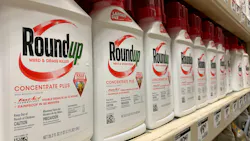
Tens of thousands of people who say they were harmed by a popular weedkiller were left with little legal recourse following a U.S. Supreme Court decision that has intensified the battle over pesticides.
In its 7-2 decision in Monsanto Company v. Durnell, the court narrowed the ability of plaintiffs to argue that pesticide makers should have warned consumers about their products’ health effects. The decision has stopped these cases in their tracks while also widening a wedge between “Make America Healthy Again” activists and the federal government.
Minnesotans with still-pending Roundup cases will either have to enter a settlement proposed by Bayer, the maker of the weedkiller, or will be forced to “pack up their marbles and go home,” said Tony Nemo, a Rochester-based partner at the law firm Meshbesher and Spence.
The case stemmed from a Missouri farmer who said 20 years of exposure to Roundup caused his Non-Hodgkin lymphoma. The active ingredient in Roundup, glyphosate, has been linked with the cancer in many studies, but the Environmental Protection Agency maintains that it is not a carcinogen.
The argument that the company failed to warn consumers “was the big claim, really, in the Roundup cases,” said Nemo, who has handled hundreds of such cases over the years. Only a few are still pending at his firm.
Glyphosate is the best-selling pesticide used on Minnesota farm fields, with 16.2 million pounds sold in 2024, according to the state Department of Agriculture.
Now, the highest court has affirmed that only EPA can determine what warnings come on a pesticide’s label, and the maker can’t be held responsible for adverse outcomes so long as it follows the agency’s direction.
Bayer proposed a $7.25 billion class action settlement earlier this year, but that amount will be diluted among thousands of claims, Nemo said, and in some cases, plaintiffs’ insurers may preempt their payouts by demanding compensation for the medical care they covered.
Farm groups argue that the decision, which held that companies could not be compelled to add product warnings beyond what EPA requires on a label, was the right one.
The ruling prevents “a patchwork of state laws and labels that make conflicting claims and offer inconsistent guidance,” American Farm Bureau Federation President Zippy Duvall wrote in a statement.
Seeking a favorable ruling from the Supreme Court was part of a long-signaled legal strategy by Bayer, which bought Roundup maker Monsanto in 2018. The company has also removed glyphosate from formulations of Roundup used around homes.
“This litigation has enormous costs for the company and has impacted public trust,” Bayer CEO Bill Anderson wrote in a statement. “The decision brings overdue justice on an issue that should have been clarified much earlier. It’s time to put it behind us.”
The litigation hasn’t just been expensive. In one case, it revealed that Monsanto had significant influence in the scientific conversation around Roundup.
Discovery during one lawsuit in 2017 revealed that Monsanto essentially ghost-wrote an influential 2000 paper that concluded that “under present and expected conditions of use, Roundup herbicide does not pose a health risk to humans.”
The conclusion was incorporated into international disputes over pesticide spraying, into the Agency for Toxic Substances and Disease Registry’s 2020 profile of glyphosate, and into many other academic papers without an acknowledgement of the conflict of interest, according to an analysis published last year.
“We only know that [Monsanto ghost-wrote the paper] through the civil lawsuit process and the discovery process,” said Geoff Horsfield, a legislative director for Environmental Working Group.
That revelation is part of why glyphosate has become a political flashpoint between MAHA activists and farm interests in the Republican coalition.
Health Secretary Robert F. Kennedy, Jr., partially built his legal career on suing Monsanto, the original Roundup maker, including securing a $289 million verdict in 2018, in the first cases that proceeded to trial (the award was later reduced to $21 million).
President Donald Trump’s administration has taken a different tack: he signed an Executive Order in February, for example, that requires manufacturers to keep making glyphosate because it is “crucial to the national security and defense, including food-supply security.”
Shortly after that move, Kennedy appeared on the podcast of influencer Theo Vonn and said that it was not possible to restrict the chemical because, “Right now if you end glyphosate outright, it would put out of business 80 percent of our farmers.”
Those statements sparked outrage in the MAHA community Kennedy helped create. Influencers in that world also decried the Supreme Court decision last week.
“I am literally sick. This is a devastating blow to every family that trusted our justice system,” Vani Hari, an activist who goes by the name The Food Babe, wrote on X last Thursday.
Before the Supreme Court decision, legal verdicts in the Roundup cases had been “mixed,” said Yvonne Flaherty, a Minneapolis-based partner with Lockridge Grindal Nauen who has represented plaintiffs nationwide suing pesticide makers.
The ruling will also impact many other similar cases against other chemicals with labels regulated by EPA, like paraquat, a herbicide that has strong evidence linking it to Parkinson’s Disease.
There has been a movement to ban paraquat at the state level, and Vermont was the first to bar it this year. Lawmakers unsuccessfully tried to pass a similar ban in Minnesota this year.
“There are other types of claims we can bring” beyond those that deal with the pesticides’ labels, Flaherty said, but her firm is still reviewing their options.
She guessed that Congress may act on pesticide issues, and some lawmakers have already been posting about attempts to hold chemical makers accountable.
“Nothing can really replace the federal government taking action,” Horsfield said.
©2026 The Minnesota Star Tribune. Visit startribune.com. Distributed by Tribune Content Agency, LLC