AI Model Screens 1.3 Million Molecules to Improve CO2 Conversion
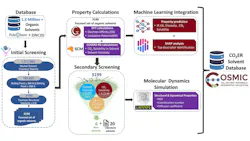
A new computational approach from researchers at Stony Brook University could accelerate the development of electrochemical systems that convert carbon dioxide into useful chemicals and fuels. The research team developed a machine learning-based framework to identify liquid solvents that improve CO2 dissolution and reaction performance, potentially helping advance carbon recycling technologies.
The study, published in Cell Reports Physical Science, focused on improving electrolytes used in CO2 electroreduction systems.
According to the researchers, the electrolyte environment plays a key role in determining how much CO2 can dissolve, how efficiently reactions proceed, how stable the system remains under electrical conditions and what products are produced. Because millions of potential solvent options exist, the team used computational modeling and machine learning to screen candidates instead of testing them individually.
The researchers evaluated 1.3 million possible molecules and identified six promising solvent candidates — five cyclic ethers and one nitrile — that had not previously been tested for this application. The identified solvents demonstrated the ability to dissolve significant amounts of CO2, a key factor in improving reaction performance.
The team also used the computational analysis to identify molecular characteristics that influence solvent performance, creating design guidelines for developing future electrolytes. The resulting data, models and findings were made available through the COSMIC (CO2 Solvent Materials Informatics Collection) database to support additional research.
CO2 electroreduction uses electricity to transform carbon dioxide into products such as carbon monoxide, ethylene and ethanol. Improving the efficiency and selectivity of these systems could support efforts to convert emissions into valuable chemical feedstocks.
The researchers did not outline specific next steps, but the framework is intended to help guide future development of electrolytes and carbon conversion technologies.