Sintef Builds CO₂-to-Acetone Pilot Facility Using Gas Fermentation Technology
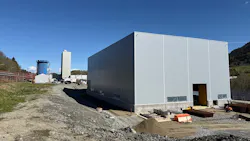
Sintef Process Technology Centre in Tiller, Norway, is constructing a pilot-scale facility designed to convert captured CO₂ into acetone using gas fermentation, with completion and operational readiness targeted for the end of 2026.
The facility is being developed as part of the EU-funded PYROCO2 project, which aims to convert CO₂ and green hydrogen into acetone and subsequently into a range of other industrial chemical products. According to the company, the technology platform is currently the only one of its kind using gas fermentation to produce acetone directly from CO₂.
At design capacity, the facility will process approximately 700 metric tonnes (approximately 772 U.S. tons) of industrial CO₂ and renewable hydrogen to produce up to 300 metric tonnes (approximately 331 U.S. tons) of acetone per year. The process uses bacteria in bioreactors to convert CO₂ and hydrogen into acetone, with hydrogen supplied by an on-site electrolyser powered by renewable electricity. U.S. company Power to Hydrogen will supply the electrolysis system, with delivery planned for the fourth quarter of 2026.
According to Sintef, the pilot facility will also generate research data to support further scale-up of the technology at industrial sites including Herøya Industrial Park and other European industrial clusters. The organization said the long-term goal is to enable reductions of up to 17 million metric tonnes of CO₂ equivalents by 2050.
"By converting CO₂ into valuable products, industry can meet increasingly strict climate requirements while maintaining competitiveness and contributing to a sustainable circular bioeconomy," said Alexander Wentzel, chief scientist at Sintef, in a statement.
"When developing and testing technologies, strong research support is crucial. It allows technologies to mature before industrial deployment," added Duncan Akporiaye, vice president of Research at Sintef.