German Energy-Intensive Sectors Face Job Losses Amid Rising Costs
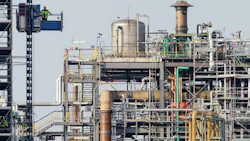
Frankfurt — High energy prices have led to lower production and job losses in particularly energy-intensive industrial sectors in Germany, official figures showed on May 15.
Production in selected sectors such as chemicals, paper, glass and metal production has declined by 15.2% since February 2022 – a significantly greater drop compared to the 9.5% decline recorded across industry as a whole, the Federal Statistical Office reported.
The figures include data up to March this year.
The decline in production has resulted in the loss of a significant number of jobs. In March 2026, 794,400 people were employed in energy-intensive sectors, 6.3% fewer than in February 2022, according to the figures.
This corresponds to a loss of around 53,200 jobs.
The paper industry suffered the largest proportional loss (down 8.6%), followed by metal production and processing (down 7.1%).
One exception is petroleum processing, where production increased by 24.6% and 1,000 new jobs were created. Significant growth has been recorded in the sector particularly since January 2026.
In 2024, energy-intensive industrial sectors accounted for 75.6% of the total energy consumed by German industry.
The largest consumer was the chemical industry, with a share of 27.9%, ahead of metal production and processing (23.7%) and petroleum processing (10.7%).
The main energy sources were natural gas, accounting for 26.3%, followed by oil (21.0%), coal (18.1%) and electricity (15.2%).
©2026 dpa GmbH. Distributed by Tribune Content Agency, LLC.