TSCA Reform Draft Sparks Senate Debate Over Chemical Safety, Innovation
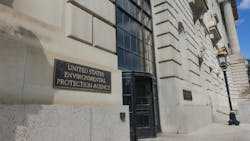
Industry experts and GOP lawmakers backed proposed Toxic Substances Control Act reforms in a Senate committee hearing March 4. But a key figure in the last major chemical safety overhaul warned the current proposal could put the public’s health at risk.
The panel addressed the discussion draft for TSCA fee reauthorization at a Committee on Environment and Public Works session. Several speakers offered examples of how the current new chemicals review process stifles innovation and puts the U.S. at a competitive disadvantage. The use of specialized chemicals are critical for innovation in the semiconductor industry, stated David Isaacs, vice president of government affairs for the Semiconductor Industry Association. Delays and regulatory uncertainty pose risks to domestic semiconductor competitiveness, Isaacs told the committee.
“Our industry is very competitive, and the United States is in a global race for attracting investments in our industry,” said Isaacs in response to a question by Republican Sen. John Curtis from Utah. “And having more certainty and predictability with regard to being able to introduce new substances into the processes, particularly at the leading edge, the most advanced processes, is very important.”
Isaacs said he supports key provisions in the draft, including risk assessments that consider actual conditions of use rather than applying a blanket risk determination across all possible uses of a chemical.
But Michal Ilana Freedhoff, a principal drafter and negotiator of the Frank R. Lautenberg Chemical Safety Act in 2016, said the proposal could allow some chemicals to enter the market without any review.
“There are some provisions in the draft that result in that outcome,” said Freedhoff, a senior policy adviser for Holland & Knight. “For example, there's language deeming some new chemicals to be equivalent to other chemicals that are already on the TSCA inventory, thus allowing EPA's review to be skipped altogether even though most of the chemicals on the inventory have never been reviewed under TSCA.”
Other provisions could prevent the agency from retrieving the information it needs to complete a review, said Freedhoff, who was the assistant administrator for the EPA’s Office of Chemical Safety and Pollution Prevention during the Biden administration.
The agency’s ability to carry out reviews could be further strained by Trump administration cuts, she said. About 25% of EPA staff have left in the past year, including one-third of the lawyers who supported the agency’s chemical-safety efforts, she said. Also, the office that administers TSCA has about 40 fewer people on staff than it had at the end of the Biden administration.
“This draft mandates that EPA stand up new programs, functions, processes, rules, guidance documents and other requirements, generally, in one year or less. Quite simply, this isn't implementable and would likely slow things down rather than speed them up,” she said.
In his opening remarks, Sen. Sheldon Whitehouse, a Rhode Island Democrat, slammed the current administration for allowing chemical industry insiders to take over the EPA's review process, warning they’re placing profits over safety.
“The fossil fuel, tobacco and pharmaceutical industries demonstrate time and again that profits matter more to them than truth or the public interest,” said Whitehouse, a ranking member of the Senate Environment and Public Works committee. “The chemical sector in America has yet to prove itself any better.”
He noted that chemical manufacturers had covered up the dangers related to per- and polyfluoroalkyl substances for decades. He also said the Trump administration’s EPA has deferred to industry-backed research over impartial scientific studies.
“The so-called gold-standard science executive order gives agency appointees beholden to Trump's industry donors, not scientists with objective expertise, authority to correct scientific information,” he said. “That's not science. That is [Lee] Zeldin's political team finding the industry-friendly outcome they want and then looking for reasons, real or fabricated, to justify that outcome.”
But former EPA chemist Richard Engler likened the agency's approach to requiring a shark cage for every swimmer at a beach regardless of the shark-attack risk. TSCA doesn’t differentiate between significant and minor health impacts, said Engler, who serves as the director of chemistry for Bergeson & Campbell LLP. He cited chemical burns as an example, arguing that by the same logic EPA applies to chemical hazards, the agency could theoretically prohibit steel production because of the burn risk from ovens.
“It makes sense for EPA to use TSCA to protect against invisible hazards, such as systemic, developmental and reproductive toxicity,” he stated. I do not think TSCA authority is needed to protect against common everyday hazards, including irritation, corrosion, flammability and inert dust.”
Supporters of the draft also argued that the proposed fee reauthorization would help reduce a backlog of reviews, which includes applications for biobased chemicals. The draft establishes four review tiers to match the complexity and risk profile of each submission.
“Separate pathways are created so novel or higher-risk substances are carefully scrutinized while familiar chemistries with established data can be approved more quickly,” said Sen. Kevin Cramer, a Republican from North Dakota.
Curtis said many of the chemicals awaiting approval would replace more dangerous substances.
“If we want to replace these chemicals, we've got quite a host of chemicals that are safer and cleaner for our environment that we need to get through the system,” he said.
The TSCA fee authority expires Sept. 30, and its loss would cut roughly 25% of EPA's new chemicals review funding, Whitehouse said.
About the Author
 Jonathan Katz
Jonathan Katz
Executive Editor
Jonathan Katz, executive editor, brings nearly two decades of experience as a B2B journalist to Chemical Processing magazine. He has expertise on a wide range of industrial topics. Jon previously served as the managing editor for IndustryWeek magazine and, most recently, as a freelance writer specializing in content marketing for the manufacturing sector.
His knowledge areas include industrial safety, environmental compliance/sustainability, lean manufacturing/continuous improvement, Industry 4.0/automation and many other topics of interest to the Chemical Processing audience.
When he’s not working, Jon enjoys fishing, hiking and music, including a small but growing vinyl collection.
Jon resides in the Cleveland, Ohio, area.