Joint BioEnergy Institute Develops Bio-Based Carbene-Transfer Reactions
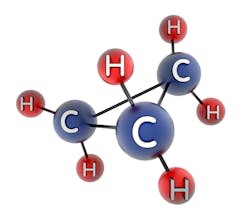
A team of researchers in the United States has developed a scalable, microbial platform capable of carrying out carbene transfer reactions.
Carbenes are highly reactive carbon-based molecules containing divalent carbon atoms and used in the manufacture of chemicals, fuels and pharmaceuticals. However, this use has been limited because of the expensive and often toxic chemicals needed to drive their reactions.
What the researchers from Lawrence Berkeley National Laboratory and UC Berkeley, Berkeley, California, have done is replace these chemicals with natural products produced by an engineered strain of the bacteria Streptomyces (Figure 1).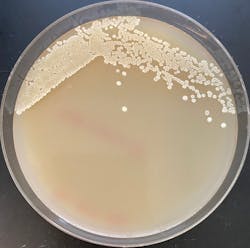
Based at the U.S. Department of Energy’s Joint BioEnergy Institute (JBEI), the researchers observed the engineered bacterium as it metabolized and converted sugars into the carbene precursor and its alkene substrate.
Streptomyces also expressed an engineered enzyme that used those chemicals to produce cyclopropanes, high-energy molecules that could potentially be used in the sustainable production of novel bioactive compounds and advanced biofuels.
“We can now perform these interesting reactions inside the bacterial cell. The cells produce all the reagents and the cofactors, which means that you can scale this reaction to very large scales for mass manufacturing,” explains Jay Keasling, principal investigator, senior faculty scientist at Lawrence Berkeley National Laboratory and CEO of the JBEI. “All you need to add is sugar, and the cells do the rest,” he adds.
While Keasling acknowledges that the conversion efficiency for the integrated carbene-transfer reaction and the final product titer are not high, he believes they are sufficient for proof of concept: “The work demonstrates a new type of chemistry in the cell, along with production of the precursors for that chemistry.”
Writing in a recent issue of Nature, the researchers note this fully integrated system can be envisioned for many carbene donor molecules and alkene substrates.
Nevertheless, while the researchers may have developed a scalable platform, its commercialization is still far off.
“We would need to increase the titer, rate and yield of the production process. This would involve extensive engineering of the host bacterium’s pathways to produce the precursors as well as the enzyme that catalyzes the reaction,” shares Keasling. “We don’t have plans to do this work. This might be something that a company would want to do if they were to scale the process,” he notes.
For now, the researchers are examining other types of similar precursors to see if they can diversify the substrate and product ranges.
About the Author
 Seán Ottewell
Seán Ottewell
Editor-at-Large
Seán Ottewell is a freelance editor based in Ireland. He has an impressive background in the chemical industry. After earning his degree in biochemistry at Warwick University, UK, he earned his master's in radiation biochemistry from the University of London. His first job out of school was with the UK Ministry of Agriculture, Fisheries and Food, London, where he served as scientific officer with the food science radiation unit.
From there he entered the world of publishing. In 1990, he was the assistant editor of The Chemical Engineer, later moving on to the chief editor's position. Since 1998, he has been a regular contributor to European Process Engineer, European Chemical Engineer, International Oil & Gas Engineer, European Food Scientist, EuroLAB, International Power Engineer, published by Setform Limited, London, UK.
Chemical Processing has been proud to call Ottewell Editor at Large since 2007.
He and his family run a holiday cottage in the small village of Bracklagh in East Mayo. He also fancies himself an alpaca farmer.