Solutions Spotlight: Don't Let the Wrong Mag Meter Cost You






Corrosive acids, erosive slurries, viscous polymers, fluids with variable conductivity — these are the kinds of process streams that prove most challenging. Selecting the wrong technology or materials can mean frequent failures, costly downtime or, worse, a safety incident. Electromagnetic flow meters — also known as mag meters — have been a workhorse of the chemical industry for decades. But there's a lot more nuance to applying them well in tough services than most people realize, and some newer developments in the technology haven't gotten nearly the attention they deserve.
To better understand all that mag meters have to offer, Chemical Processing sat down with Tim Lellman, electromagnetic flow product manager at KROHNE. Here is an edited version of that conversation.
Q: Our audience deals with many process fluids, but from your perspective, what are some unusual or especially challenging situations you've encountered for flow measurement?
A: There are plenty of them out there. A couple come to mind right away. One very common but nonetheless difficult scenario is a core alkali-type process — typically something like a hydrochloric acid or hydrofluoric acid situation. And then there's brine, which is common but still tricky. It varies in how erosive it can be, so you have to determine what the best solution is and what wetted materials will ensure a long service life. Those are just some common but challenging applications that I think a large majority of people in the chemical world encounter.
Q: When those come up, what are some of the popular solutions?
A: The most common approach people take is a PTFE-lined mag meter paired with a metal that's compatible with the fluid. When you're talking about hydrofluoric or hydrochloric acid — especially at high concentrations — you have to consider fairly exotic metals to ensure compatibility. Those are the most common solutions for measuring those fluids. But there are a couple of other options out there that I think could be more widely adopted. In most cases, people are looking for a high-quality but cost-effective solution, which is often why they default to PTFE. But in some cases, I think there are better alternatives.
Q: Engineers need to carefully spec these instruments and understand the service they're dealing with. What do engineers most commonly get wrong when doing that?
A: I'd say the most common mistake is focusing too heavily on cost — assuming the most expensive option on the quote will provide the longest service life and best compatibility, without actually evaluating all the relevant factors. But beyond price, another common issue is selecting the wrong meter size. A mag meter is a mag meter at the end of the day, regardless of manufacturer. But upsizing or downsizing the diameter based on your flow rate can significantly affect service life. For example, if you have a 4-inch mag meter flowing at 15 feet per second, that velocity will erode the liner far faster than a flow rate of 5 feet per second would. So choosing the right pipe size to hit your target velocity is critical for maximizing meter life.
Q: Do instrumentation manufacturers still produce one-off, custom solutions? And if so, are there any risks associated with those alternatives?
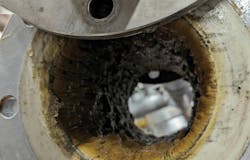
A: Some manufacturers do, but not all — which is something you'd want to confirm upfront. KROHNE, for instance, continues to produce specials, as we typically call them. A couple of examples: One is a thicker PTFE liner. Where a standard liner might be 2 to 4 mm, we can increase that to 4 to 6 mm. That extended thickness allows the liner to continue doing its job as it gradually erodes, resulting in a longer service life, less downtime and fewer leaks — with safety benefits as well.
The second example is special face-to-face lengths (lay lengths). If a customer has a mag meter that's been in service for 15 to 20 years, it's become obsolete, but had a very specific lay length, KROHNE will continue to manufacture to that dimension. That makes it far easier for the customer to drop the new meter right into their process without cutting or welding pipe.
Q: What questions need to be addressed upfront before agreeing to a custom solution? And on the flip side, are there any red flags — situations where a special might create more problems than it solves?
A: Great question. The most important thing to consider is who is providing that specialized solution. There have definitely been cases where a manufacturer produced something custom for a customer and then — for whatever reason — stopped. Maybe they no longer had the manufacturing capability, or the design changed slightly. So the key question is: Does this manufacturer have significant experience producing specials, and will they continue to support them?
As for red flags, the specials I described — a thicker liner or a custom lay length — are generally better solutions than they are sources of problems. Most of the time, a specialized configuration is designed to solve a problem, not create one. The main issue I've seen is when a manufacturer discontinues a special and the customer can no longer get the same configuration. Now they're searching for someone who can provide a comparable solution that fits in place of the original.
Q: How do you know a custom solution will be supported down the road? And what happens if a customer can't find something that fits?
A: Usually in that case, the customer has to go back to the drawing board and find a secondary solution — which can be frustrating when the original was working well. We've worked with customers in exactly that situation: The previous manufacturer no longer makes the meter to that size or lay length, and they're asking whether we can fill that gap.
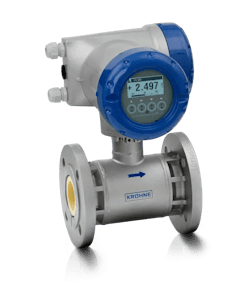
One area where this comes up frequently is electronics. The converter — or transmitter — can become obsolete over time, and there isn't always backward compatibility between newer converters and older sensors. So you're left with a functioning flow tube but no electronics to drive it, forcing a full meter replacement. At KROHNE, our IFC 300 converter addresses this: It's compatible with many of our older flow tubes and can also be used with sensors from other manufacturers in many cases. That flexibility has helped a number of customers solve a partial-failure problem without having to replace the entire installation.
Q: Can you walk through an example of a situation where an alternative solution turned out to be a better fit than what the customer originally specified — and how you helped them through that?
A: Sure — going back to hydrochloric acid, which I mentioned earlier. The most common solution for that service is a PTFE-lined mag meter. But with at least one customer, we found that over time the hydrochloric acid was actually permeating through the PTFE liner, causing failures. So we looked for an alternative material, and that led us to a ceramic-lined meter — which KROHNE also manufactures.
When we first raised the idea, the customer was hesitant, mainly because most ceramic-lined meters on the market are wafer or sandwich style — meaning no flanges. That makes installation more difficult. Think of it like changing a tire: when you're torquing all those bolts around the meter, it's easy to over-torque one side and under-torque the other, creating a small leak path that might not be obvious at first. That had been their previous experience with a wafer-style meter. But when we told them we could supply a ceramic-lined meter with flanges, they were much more willing to try it.
There was another significant benefit as well. A standard installation typically involves a mating flange, a gasket, a grounding ring, another gasket and then the sensor flange — on both sides. That's roughly six potential leak paths around the meter. To reduce those — particularly for safety reasons in acid service — we also offer virtual reference on our converter, which eliminates the need for grounding rings. That reduces the number of leak paths and makes installation simpler and safer for the maintenance workers who have to install and inspect these meters on a regular basis. It was a great outcome, and that customer continues to use that solution today.
Q: What advice would you give a process engineer who's about to inherit a plant with aging mag meters in tough services? What's the first thing they should do?
A: That's a common situation, and the first thing I'd recommend is testing the meters. Most modern mag meters support some form of in-situ verification — checking both the flow tube and the electronics to confirm they're healthy. The procedures vary by manufacturer, but the goal is the same: confirm whether the meter is functioning within specification before deciding whether to replace it.
What you'll often find is that the electronics — the converter — are the first to fail. They're more exposed to the surrounding environment, including heat, humidity and chemical atmosphere, than the flow tube itself. The sensor may still be in good shape while the converter has degraded.
That's where backward-compatible electronics can be a big advantage. A meter that's been installed for 15 or 20 years — which I see regularly on customer sites — may have a perfectly functional flow tube but need new electronics. Our IFC 300 can often support those older sensors, providing updated diagnostics and features like virtual reference grounding. And as I mentioned, it's not limited to KROHNE sensors. In many cases, we've been able to provide that solution to customers dealing with partially failed meters from other manufacturers as well.
Q: Earlier you touched on over-specifying and under-specifying for an application. What's the most common misconception that leads to that?
A: A lot of it comes down to sizing. The most common misconception is that you always have to match the meter diameter to the pipe diameter — and that's simply not true. In some cases, dropping down one pipe size can actually improve both accuracy and service life. Mag meters measure flow linearly, so as velocity increases, accuracy improves. A smaller bore meter at the same flow rate will give you a higher velocity across the measurement section, which can sharpen the reading.
The other sizing-related question I get all the time is about straight run. The KROHNE recommendation is typically five diameters upstream and two downstream to ensure a uniform flow profile. Some older guidance called for 10 upstream and five downstream, but 5D/2D is the current standard among most manufacturers.
One nuance worth knowing: For smaller line sizes — a 2-inch meter, for example — some of the required inlet length is already built into the meter's face-to-face dimension. That's especially useful in tight installations.
Beyond sizing and straight run, the most important thing is ensuring the pipe is always full. I've visited customer sites where the meter appeared to be malfunctioning, and the real culprit was a partially filled pipe. Once they added back pressure or made other process adjustments, the meter performed exactly as specified. That's a process-side fix, not an instrumentation fix — and it's more common than most people expect.
For more information, visit: https://www.krohne.com/