Court Dismisses Antitrust Claims in Climate Change Lawsuit
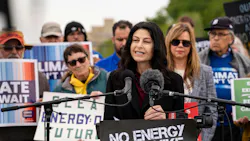
GRAND RAPIDS, MI - A federal judge on Sept. 22 dismissed a lawsuit brought by Michigan Attorney General Nessel against some of the biggest oil companies in the world over climate harms and energy prices.
The suit took a novel approach to litigation focused on climate change by using antitrust law to allege Big Oil conspired as a “cartel” to keep a grip on the market and suppress competition from renewable energy and electric vehicles.
But U.S. District Judge Jane Beckering in Grand Rapids rejected the claims in a 25-page ruling, offering a victory for defendants BP, Chevron, Exxon Mobil, Shell and the industry trade group American Petroleum Institute.
The antitrust laws don’t provide a remedy for many of the harms alleged by Michigan, she wrote, including increased insurance premiums due to climate-fueled storms.
“These harms are, at most, ‘collateral damage’ with respect to the markets in which Michigan alleges Defendants conspired: the transportation and primary energy markets,” reads the opinion.
The law could apply to alleged energy overcharges because of oil companies’ efforts to keep consumers on fossil fuels. But “the distance is too great” between the claims of conspiracy and the charges for Beckering to find that it caused them, she wrote.
The suit joined others from cities and states across the country that have sued oil corporations for their role in allegedly covering up knowledge of climate harms from fossil fuels. But its use of antitrust law made it stand out.
Beckering’s opinion adds to a “growing list” of courts that have dismissed climate lawsuits, said Theodore Boutrous, an attorney representing Chevron, in a statement. “These climate suits are baseless no matter plaintiffs’ attempts to concoct new litigation theories, like these meritless antitrust claims.”
Oil companies have pushed for immunity from such legal attacks, and some states have passed laws to shield the industry.
“Michigan’s lawsuit was part of a coordinated campaign against an industry that is vital to everyday life and serves as the engine of America’s economy. Climate policy is a federal, not state, issue, and we are pleased with the court’s decision,” said Ryan Meyers, general counsel for the American Petroleum Institute, in a statement following the decision.
It wasn’t immediately clear how Nessel would proceed with the legal efforts, but spokesperson Danny Wimmer said the attorney general disagrees with the ruling. “Our office is reviewing the opinion in full and considering our options,” he said in a statement.
Nessel, a Democrat whose term is over at the end of the year, filed the suit on behalf of the people of Michigan in January, decrying an “energy affordability crisis” affecting businesses and homeowners.
She placed blame on the oil companies, alleging a decades-long and coordinated campaign to inhibit the adoption of cleaner, cheaper technologies and undermine the link between burning fossil fuels and climate change.
Nessel hired three outside law firms for the litigation, retained on a contingency basis, meaning their compensation could only come from financial relief awarded as part of the lawsuit.
In Michigan, a coalition of business groups decried the attorney general’s efforts to take the fossil fuel industry to court in 2024, saying it would have a “chilling effect” on the entire state’s economy.
President Donald Trump’s administration also preemptively sued Michigan in 2025 to block the anticipated lawsuit, but that case was also dismissed.
In a statement, members of the U.S. Justice Department called Nessel’s efforts “another aggressively anti-energy lawsuit” and committed to fight back against “this sort of state overreach.” The department submitted a brief supporting the companies in Michigan’s lawsuit.
©2026 Advance Local Media LLC. Visit mlive.com. Distributed by Tribune Content Agency, LLC.