5 Quick Questions with Sean Heinroth, Engineer and Chemical Industry Adviser

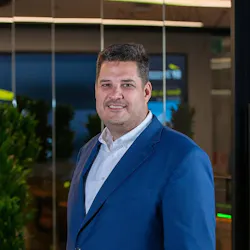
Houston-based Sean Heinroth, a principal with EY Parthenon, Ernst & Young LLP, advises chemicals and advanced materials companies on strategy and execution. With more than 25 years of experience, he works with executive teams on growth strategy, portfolio optimization, mergers, acquisitions and divestitures and large scale business transformations. Prior to EY Parthenon, Heinroth worked as a manufacturing engineer in the chemicals industry. He holds a bachelor’s degree in engineering and an MBA from Texas A&M University.
His team reached out to me to see if I’d like to pick his brain. Always wanting to learn more, I posed my five favorite questions:
1. What’s something you’ve learned recently that changed how you approach your work?
I have come to accept that uncertainty is something that must now be considered in short-term planning cycles. Assumptions that once held through a quarter or a full planning cycle can shift by the day or week. Recent examples include tariffs, regime changes and supply chain disruptions — all of which affect the chemical industry and have forced executives to design contingencies into their plans.
Like many, I have traditionally relied on experience and clean data analysis to converge on the most likely solutions. While both have merit, the last few months have reinforced the idea that conventional wisdom can be fragile. So now, when I’m working with EY teams and clients to frame short-term problems, we deliberately build a few plausible scenarios and ask: What would have to be true for each to occur? What early signals would tell us we’re drifting from our base-case scenario? And what decisions are reversible vs. one-way doors?
This has changed my approach from optimizing a single short-term forecast to stress-testing options and sequencing actions to adapt quickly. The result is better alignment — less debate about whose model is “right” and more clarity on triggers, trade-offs and how teams will respond to what may come next.
2. What part of your work energizes you most, and what drains you?
The U.S. chemicals industry is at an inflection point. While the industry is in a prolonged downturn, the forces at play aren’t purely cyclical. Global competition is intensifying, trade flows are shifting under new policies and decarbonization milestones are still looming.
What energizes me is helping leadership teams navigate this “perfect storm” of complexity across their operations into the core of their strategy. For example, pressure-testing assumptions, building scenarios and helping teams decide where to defend, where to invest and how to sequence moves so they can adapt as conditions change.
On the flip side, the same “storm” can also be draining because robust answers are genuinely hard to come by. Volatility can outpace even the best analysis, and it’s easy for organizations to become reactive rather than resolve underlying strategic questions.
3. If you could solve one problem in the chemical industry tomorrow, what would it be?
If I could solve one problem tomorrow, it would be the short-termism embedded in how many U.S. chemical companies set targets, allocate capital and manage performance. In an environment shaped by cyclical swings and structural disruption — trade policy shifts, supply chain fragility and rising decarbonization expectations — leaders often respond by optimizing the next quarter. Those actions may protect near term earnings, but they can also reinforce the very disadvantages companies are trying to escape.
Solving this requires rewiring the operating system: incentives that reward resilience and value creation over simple utilization, decision processes that separate “one-way door” bets from reversible moves and scenario triggers that let teams act early rather than explain variances late. This could enable faster portfolio choices, including exits from structurally disadvantaged positions, disciplined investment in reliability and decarbonization pathways and commercial strategies that assume routes and markets can change quickly. Companies that make this shift won’t just survive volatility, they’ll help reshape the U.S. chemicals landscape.
4. What’s a project or accomplishment you’re proud of that others might not fully appreciate?
During my 25-year career in the chemicals industry, I have been part of some truly phenomenal teams and work. One project I’m currently involved in is a business transformation effort with a global chemicals company. This may be work that others might not fully appreciate, because much of it happens without fanfare and at a methodical pace spanning years.
Similar to others within the industry, this company is facing headwinds in seemingly every direction: a tough business cycle, product commoditization, cost pressure, reliability issues and questions about longer-term competitiveness. Over the past two years, we’ve worked to reshape its business and operating models, not through a single “big reveal,” but through hundreds of hard decisions, clarifying what truly creates value, simplifying how work gets done, and building accountability so change sticks.
What I’m most proud of is the trust built during a difficult period. The leadership team has acted with courage and conviction, even when the path wasn’t linear and results took time. Over time, that kind of steady work makes lasting change possible and it’s rewarding to see an organization start to believe in its ability to adapt.
5. How has your work influenced how you see the world outside of your job?
My work has made me more patient and more empathetic to others, both professionally and outside the office. In chemical transformations, outcomes are rarely driven by a single “right answer.” Progress depends on whether people feel heard, whether trade-offs are made transparently and whether leaders stay steady when results take longer than expected.
That perspective has changed how I interpret situations beyond work. I’m more aware that most challenges involve constraints you don’t see at first, such as imperfect information, competing priorities or different definitions of success. Instead of reacting quickly, I try to pause and consider better questions: What’s the real problem driving the situation? What would meaningful progress look like in the next step, not just the next quarter?
It’s also reinforced that meaningful change is often quiet and nonlinear. Whether at work or in other areas of life, progress takes time, repetition and a willingness to adjust course without losing sight of the broader intent.
Editor’s Note: Want to answer these five questions? Send me an email at [email protected].
About the Author
 Traci Purdum
Traci Purdum
Editor-in-Chief
Traci Purdum, an award-winning business journalist with extensive experience covering manufacturing and management issues, is a graduate of the Kent State University School of Journalism and Mass Communication, Kent, Ohio, and an alumnus of the Wharton Seminar for Business Journalists, Wharton School of Business, University of Pennsylvania, Philadelphia.
Recent Awards:
2025 Eddie Award for her column "Lax Regulations Burn Rivers"
2024 Jesse H. Neal Award for best podcast Process Safety with Trish & Traci