Gulf Faces Lasting Impact From Spill
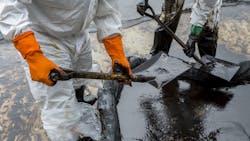
For decades scientists believed that oil spills did most of their damage in the first few weeks, as oil coated animals, plants and terrain.
Even today, to most observers it seems that nature bounces back very quickly from such disasters, as birds and fish repopulate affected areas and evidence of oily deposits on beaches and rocks soon disappears.
But disasters such as the Bouchard 65 barge spill near Cape Cod in 1974, Amoco Cadiz in France in 1978, the Ixtoc 1 well blowout in the Gulf of Mexico in 1979 and the 1989 Exxon Valdez oil spill in Alaska have given scientists a chance to carry out longer-term investigations.
In particular, the Exxon Valdez spill has generated a wealth of research into how such events affect ecosystems. One of the key findings is that sub-lethal biological effects, particularly those associated with reproduction, best predict the long-term impacts that still are apparent in herring, salmon and the region's many other aquatic species.
Now, similar findings are emerging from a combined field and laboratory study carried out by a research team at Louisiana State University (LSU), Baton Rouge, La., into the impact that last year's Deepwater Horizon drilling disaster is having on marsh fish species in the Gulf of Mexico.
The research team is headed by LSU associate professors of biological sciences Fernando Galvez and Andrew Whitehead, with additional inputs from scientists at the department of chemistry and biochemistry at Texas State University, San Marcos, Tex., and the department of biological sciences at Clemson University, Clemson, S.C. Funding for the work was provided by the National Science Foundation, the National Institutes of Health, and the Gulf of Mexico Research Initiative.
In the September 21, 2011, issue of the Proceedings of the National Academy of Sciences (www.pnas.org/cgi/doi/10.1073/pnas.1109545108), the team reports on a four-month field study monitoring the biological effects of oil exposure on fish in the Gulf's coastal marsh habitats. The researchers used killifish as the model species because they are among the most abundant vertebrate animals in those marshes.
The team sampled multiple tissues from adult killifish from each of six field sites during three periods spanning the first four months of the spill. They then compared biological responses across time (before, at the peak, and after oiling) and across space (oiled sites and not oiled ones) and integrated responses at the molecular level using genome expression profiling with complementary protein expression and tissue morphology.
The researchers characterized genome expression profiles for livers because that organ is internal and integrates xenobiotic effects from multiple routes of entry (gill, intestine and skin), and because liver is the primary tissue for metabolism of toxic oil constituents. The team also characterized tissue morphology and expression of CYP1A protein, a common biomarker for exposure to select polycyclic aromatic hydrocarbons, for gills, the organ that provides the greatest surface area in direct contact with the surrounding aquatic environment. In addition, the scientists exposed developing embryos to field-collected water samples to document bioavailability and bioactivity of oil contaminants for this sensitive early life stage.
Their study shows that, despite very low to non-detectable concentrations of oil constituents in the water and in fish tissues, biological effects in fish indicate dramatic responses indicative of exposures to the toxic components of oil. That is, the biological responses were much more sensitive indicators of exposures and effects from the contaminating oil than was the environmental chemistry.
"Though the fish may be 'safe to eat' based on low chemical burdens in their tissues, that doesn't mean that the fish are healthy or that the fish are capable of reproducing normally," says Whitehead.
Genome expression responses detected in liver tissues were predictive of the types of responses associated with developmental abnormalities and death observed in previous studies by Galvez and Whitehead. Furthermore, responses were predictive of impairment of fish reproduction, meaning the probable impact on populations is significant.
Additionally, gill tissues, which are important for maintaining critical body functions, appeared damaged and had altered protein expression coincident with oil exposure; these effects persisted long after visible oil disappeared from the marsh surface. The controlled exposures in laboratory settings of the developing embryos to field-collected waters induced similar cellular responses.
"This is of concern because early life-stages of many organisms are particularly sensitive to the toxic effects of oil and because marsh contamination occurred during the spawning season of many important species," notes Whitehead.
The LSU research group is now following up with studies examining more-direct effects of oil exposure on reproduction, development and growth.
Seán Ottewell is Chemical Processing's Editor at Large. You can e-mail him at [email protected].
About the Author
 Seán Ottewell
Seán Ottewell
Editor-at-Large
Seán Ottewell is a freelance editor based in Ireland. He has an impressive background in the chemical industry. After earning his degree in biochemistry at Warwick University, UK, he earned his master's in radiation biochemistry from the University of London. His first job out of school was with the UK Ministry of Agriculture, Fisheries and Food, London, where he served as scientific officer with the food science radiation unit.
From there he entered the world of publishing. In 1990, he was the assistant editor of The Chemical Engineer, later moving on to the chief editor's position. Since 1998, he has been a regular contributor to European Process Engineer, European Chemical Engineer, International Oil & Gas Engineer, European Food Scientist, EuroLAB, International Power Engineer, published by Setform Limited, London, UK.
Chemical Processing has been proud to call Ottewell Editor at Large since 2007.
He and his family run a holiday cottage in the small village of Bracklagh in East Mayo. He also fancies himself an alpaca farmer.