Venezuela Oil Law Overhaul Opens Door to Foreign Investment
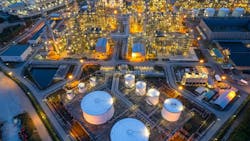
Venezuela’s recent overhaul of its decades-old hydrocarbons laws could help revive oil production and improve transparency, though key legal and structural risks remain, economists and industry advisers say.
The modification of the 2001 Hydrocarbons Law — enacted under late President Hugo Chávez — represents “a positive advance” that could help boost output by introducing more transparent administrative practices, according to economist Orlando Ochoa, an adviser to oil firms for more than three decades.
Among the reform’s most important changes are provisions allowing international arbitration to assign contracts, the creation of joint ventures to exploit crude without requiring parliamentary approval and simplified tax rules, Ochoa said.
The overhaul is unfolding as the Trump administration moves to enforce the opening of Venezuela’s oil industry to U.S. companies following the capture of Venezuelan strongman Nicolás Maduro by U.S. forces and his transfer to New York to face drug trafficking charges. The January raid reshaped the balance of power in the country and accelerated changes to its most important economic asset. Analysts say the liberalizing measures reflect both an effort by Caracas to revive production and the growing influence Washington now holds over oil revenues.
Ochoa also described as significant the legalization of Productive Participation Contracts, or CPPs, a mechanism that had been incorporated into the industry through an opaque sanctions-related framework. The formal introduction of these contracts is a central feature of the reform, codifying into law the type of agreements that for years operated in secrecy to circumvent U.S. sanctions.
Under CPPs, private companies can take over oil fields, invest capital, recover costs and market production without PDVSA holding a mandatory majority stake. While PDVSA remains the contracting authority, the new law eliminates the requirement that it own at least 60% of projects — a cornerstone of Chávez-era policy.
Legal concerns and investment risks
Despite the potential benefits, Ochoa warned that some legal provisions could discourage investment at a time when Venezuela is trying to rebuild its battered oil sector.
One major concern is the lack of compensation for private companies when assets revert to state control or are transferred to the government.
“In recent years, companies have stopped investing and are abandoning the fields. It is not a good incentive,” he said, recommending a system of “residual compensation” for firms handing over operations.
Ochoa also cautioned against assigning major projects to smaller companies lacking technical capacity, pointing to the Petrocedeño project, which was previously operated by France’s TotalEnergies and Norway’s Equinor.
“The best fields were delivered to these companies in a dark environment. We are restricting the possibility of large companies entering large projects, which were delivered to firms with less capacity,” he said.
The economist, a visiting senior research fellow in Venezuela Energy Studies at the Oxford Institute for Energy Studies, said Venezuela’s state oil company, PDVSA, needs deep restructuring after losing technical and financial capacity and suffering severe damages to its reputation in recent years.
“We must think of a new oil holding company, with a new reputation that acts as an asset manager. That should be an important reform,” he said.
Production could rise sharply
Ochoa said oil output could rise to about 1.5 million barrels per day by 2026, up from roughly 950,000 barrels per day at the end of last year, according to secondary OPEC sources.
That roughly 30% increase could generate about $22 billion in additional revenue, he estimated.
Still, major challenges remain, including improving communications and electricity infrastructure, reducing bureaucratic bottlenecks, strengthening legal and personal security and advancing democratic reforms, he said.
Economist and university professor Gustavo Machado said the reform sends a signal of greater legal stability that could encourage companies to expand operations and prompt the return of key oilfield service providers.
He added that the new phase of hydrocarbons production could also help develop sectors beyond energy, including computing infrastructure and artificial intelligence.
In Machado’s view, revenues from oil, natural gas, coal and hydroelectric power should serve as a “bridge” to build new capabilities in the Venezuelan population.
Machado said it is “plausible” that oil production could rise between 30% and 40% by the end of the year, citing Chevron’s plans to potentially double output and increased offerings from other firms.
Higher production combined with improved prices — after years of steep discounts due to sanctions — could significantly boost government revenue, he said, estimating gains of roughly $10 billion this year.
U.S. role could reshape revenues
U.S. Energy Secretary Chris Wright said this week that crude sales managed by Washington could eventually exceed $10 billion annually, revenue he said would help rebuild Venezuela.
“So far we’ve sold about $1 billion in oil. We recently signed agreements to sell another $5 billion in the coming months. So we’re talking about well over $10 billion a year,” Wright said in an interview with Fox News.
Wright, who met in Caracas last week with interim President Delcy Rodríguez to advance what he described as a “historic” energy agreement, said the income would help “start rebuilding a country and a society, restore a free press and a representative government.”
He said the deal would also supply a type of heavy crude for which many U.S. refineries were originally designed and could help lower asphalt costs in the United States by reducing construction expenses for roads.
“It’s a win for everyone and the transformation of a country without a single U.S. soldier on the ground and without a single dollar from U.S. taxpayers,” Wright said, calling the approach a new model of diplomacy.
Following the Jan. 3 capture of Maduro by U.S. forces, President Donald Trump called for “full access” to Venezuela’s oil resources, while Wright said Washington would control crude sales for an “indefinite” period — a reminder of the leverage the United States now holds over Venezuela’s main source of revenue.
A structural shift
Experts who have followed the reforms closely say the new law largely formalizes changes that have been unfolding quietly for years, allowing partners of the government to sell Venezuelan oil despite sanctions.
Where analysts differ is on what those changes ultimately represent — whether a pragmatic path toward recovery, an incomplete liberalization constrained by PDVSA’s institutional decay, or a historic surrender of oil sovereignty under foreign oversight.
Rodríguez, Venezuela’s acting president,enacted the law Thursday, reversing one of the core tenets of the socialist movement that has dominated the country for more than two decades: state control over oil production and exports.
At the heart of the reform is the end of PDVSA’s exclusive right to export crude.
Antonio De La Cruz, a senior associate at the Center for Strategic and International Studies in Washington, D.C., said the new law allows private companies to produce and export oil directly.
“This is a structural change,” he said.
The reform builds on the so-called Chevron model developed during the sanctions period.
“The law is catching up with reality,” Ochoa said.
More flexibility — and new risks
A central feature of the reform is the formal introduction of the CPPs, which allow private companies to operate fields without mandatory state majority ownership.
Several analysts warned the contracts introduce transparency risks because they retain full legal validity without comparable oversight.
“This is the darkest part of the reform,” said a Venezuela-based expert.
Most analysts expect production to rise gradually from current levels of about 850,000 barrels per day.
The reform lowers government royalties from 30% to 20% and eliminates several government charges, but Venezuela remains among the most heavily taxed oil jurisdictions, experts say.
“At current prices, the government take is about 83%,” said former PDVSA planning director Juan Fernández.
©2026 Miami Herald. Visit miamiherald.com. Distributed by Tribune Content Agency, LLC.