Study Reveals How Palladium Catalysts Drive Cleaner Vinyl Acetate Production
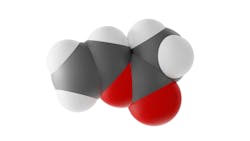
New research from Rice University provides molecular-level insight that could help chemical producers improve the efficiency, reliability and environmental performance of vinyl acetate monomer (VAM) manufacturing. VAM is a key intermediate used in adhesives, paints, coatings, packaging and textiles. According to the announcement, even modest efficiency gains can translate into significant energy and emissions reductions at an industrial scale.
The study, published in Nature Communications, was conducted in collaboration with Celanese Corp., Purdue University and Oak Ridge National Laboratory. Researchers investigated how palladium-acetate dimers and trimers behave under realistic VAM reaction conditions and how these species influence catalyst activity and selectivity.
Using simplified palladium-acetate model catalysts, the team tracked molecular transformations with advanced X-ray, spectroscopic and electron microscopy techniques combined with computational modeling. The researchers found that potassium acetate stabilizes specific palladium-acetate species and controls their conversion into palladium nanoparticles. When these nanoparticles remain small and well dispersed, catalysts show higher activity and selectivity for VAM, reducing side reactions that convert feedstocks into carbon dioxide.
The findings challenge the long-held view that palladium-acetate dimers and trimers are inactive or linked primarily to catalyst deactivation. Instead, the study found that these species actively participate in a redox cycle that governs nanoparticle growth and overall catalyst performance. According to the researchers, this molecular understanding directly connects catalyst structure to metrics important for industry, including energy use, waste generation and operational stability.
The team said the work provides a roadmap for designing next-generation VAM catalysts that operate at lower energy input, generate less waste and maintain performance for longer periods. Future research will focus on applying these molecular insights to catalyst design strategies relevant to commercial production.