5 Quick Questions with David Russell, Environmental Engineer & Expert Witness

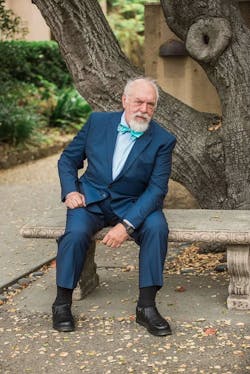
David Russell, founder of Global Environmental Operations Inc. and a frequent contributor to Chemical Processing, has over 50 years of experience in environmental engineering. A registered professional engineer in multiple states, he specializes in hazardous waste management and pollution control across six continents. David serves as an expert witness in high-profile cases, including Chevron v. Donziger. He has authored six books on environmental topics and advises major chemical companies, federal agencies and international organizations on innovative, responsible environmental solutions.
I caught up with him recently and posed these five questions:
1. What's something you've learned recently that changed how you approach your work?
I'm learning how to use AI to do research. It is a great time-saver, and if one asks the right questions, the depth of the answers is quite useful. I always confine my questions to subjects that I can easily cross-check answers or am generally familiar with.
2. What part of your work energizes you most, and what drains you?
The part of my work that energizes me the most is developing a new theory or exploring a hypothesis. I do a fair amount of legal research as an expert witness, and researching the incidents, accidents and causes is an interesting challenge.
The part I find most difficult falls into two areas: marketing my services, because I don't like bragging about my accomplishments, and keeping up with my expenses and billable hours.
3. If you could solve one problem in the chemical industry tomorrow, what would it be?
The challenge in the chemical industry is regulatory consensus. Regulations are generally anathema to production because they come down in the form of "You are hereby informed that you can no longer..." This is part of the two-party fight (industry vs. regulators). It would be better to develop a consensus between the two groups. It might take a bit longer, but there would be better communication and an overall willingness to develop practical standards.
4. What's a project or accomplishment you're proud of that others might not fully appreciate?
I'm proud to have given back by writing technical books in the environmental field. The books are dedicated to supplementing information on the practice of the environmental business. Many people come out of school with a deep theoretical knowledge in their areas of specialization but know little about the history and practical workings of how to get things done.
5. How has your work influenced how you see the world outside of your job?
I've been fortunate enough to have opportunities to work with others outside the U.S., in Europe, the Far East and the Middle East. Consequently, I have a slightly different perspective. I believe that the pandemic changed the way we work and learn to our detriment. I did a lot of training, especially in the Middle East. Part of the culture is "certificate-driven," meaning that it is important to the individuals and companies for employees to have a certificate that indicates they may have learned something by sitting in a classroom or attending a course.
When the pandemic hit, training was moved to video platforms like Zoom and Teams. The challenge is that as an instructor, one cannot determine what information is being received. Are the attendees paying attention or playing poker when they are connected? The feedback is missing, and because the information is being transmitted via an internet conference, there is none, so one cannot determine whether the subject being taught is being received by the attendees.
Even with the addition of an examination at the end of the course, AI has enabled the students to look up answers rather than learn how to solve the problems for themselves.
About the Author
 Traci Purdum
Traci Purdum
Editor-in-Chief
Traci Purdum, an award-winning business journalist with extensive experience covering manufacturing and management issues, is a graduate of the Kent State University School of Journalism and Mass Communication, Kent, Ohio, and an alumnus of the Wharton Seminar for Business Journalists, Wharton School of Business, University of Pennsylvania, Philadelphia.
Recent Awards:
2025 Eddie Award for her column "Lax Regulations Burn Rivers"
2024 Jesse H. Neal Award for best podcast Process Safety with Trish & Traci