
If you think you can shortcut proper pH design and, indeed you might get lucky, but I rather doubt it I would suggest that before you try to start up that design, you stock up on a six-month supply of both Prozac and Valium. I suspect you'll require both medicines, advises chemical engineering consultant Ben Horwitz of Penciless Process Design, Cleveland Heights, Ohio.
Lots of plant veterans undoubtedly would agree with Horwitzs admonition. While pH control often plays a crucial role in processing, achieving reliable readings remains challenging at many sites. After all, pH sensors frequently serve in aggressive chemical environments. Additionally, no other type of commonly used measurement covers such a wide range as pH does, says Gregory K. McMillan, an Austin, Texas-based consultant (and one of the instrumentation and control gurus for Ask the Experts).
Fortunately, the pH electrode can respond to changes as small as 0.01 pH (unit), state McMillan and co-author Robert A. Cameron in Advanced pH Measurement and Control, 3rd edition, published in 2005 by ISA, Research Triangle Park, N.C.
Thats impressive, especially since this responsiveness doesnt come from some new high-tech approach. The basic technology for measuring pH has been in use for over seven decades and uses conventional glass pH electrodes, notes Craig Schweitzer, product manager with Cole-Parmer Instrument Co., Vernon Hills, Ill.
Sensor and electrode often are used synonymously but shouldnt be, cautions John P. Connelly, sensor product manager for Invensys Process Systems Measurements and Instruments Division, Foxboro, Mass. The pH sensor contains both a reference electrode and a pH electrode, he explains. When technological advances within the sensor are discussed, electrodes also must be discussed, Connelly says. The speed of response and accuracy and reliability are determined by the design of the glass pH electrode. And advances certainly are taking place here.
Limitations of using glass electrodes are prompting other new developments, says Dave Joseph, Irvine, Calif.-based senior industry manager for the Liquid Division of Emerson Process Managements Rosemount Analytical unit. Conventional pH measurement requires electrodes with thin glass bulbs that allow diffusion and subsequent measurement of hydrogen ions, Schweitzer explains.
[However] the glass bulbs are prone to breakage by mishandling and/or particulates in the measurement stream. Solid-state or non-glass pH sensors, which also are called ion-sensitive field-effect transistors (ISFETs), have eliminated the glass, he notes. [These] can be stored and used in process where the sensor may not be constantly exposed to liquid. But, while ISFETs have been commercially available for approximately 10 to 12 years, they still arent used widely because of cost and potential damage by rapid cycling temperature changes, he adds.
Meanwhile, self diagnostics are beginning to play more of a role in pH sensors.
Broad duties
Gilead Alberta ULC needed sensors that could withstand the full pH range at its Edmonton, Alberta, facility, which custom manufactures active pharmaceutical ingredients and advanced intermediates for biopharmaceuticals. More and more, were finding that pH is a critical parameter that must be controlled to ensure the highest project quality in the highest yield, says Rob Pastushak, the plants senior technical supervisor. It was known that pH was critical, but we didnt have the instrument available to us with the reproducibility in accuracy and compatibility with process.
Gilead Alberta found a device Invensys Foxboro 871 pH sensor that meets its stiff criteria. Most, if not all, other sensors the company tried couldnt tolerate the process chemicals. But the 871, with its standard Ryton polyphenylenesulfide sensor body and custom-ordered Kalrez O-rings, did. Three of the 871s have seen service for about three years in organic and aqueous solutions associated with batch reactors. Monitoring can be one-time monitoring, or several times throughout the processing, Pastushak notes.
With these rebuildable sensors, end users like Gilead Alberta can reuse the sensor body, but interchange plug-in measuring electrodes that include flat and spherical glass pH, antimony pH and gold and platinum oxidation reduction potential, or ORP. The reference junction and reference electrolyte also are field replaceable.
With the 871, the plant gets reproducible accuracy of ±0.03 pH units. The accuracy that we require could be a fraction of a pH unit, Pastushak says, noting that the companys minimum accuracy is 0.1 unit or smaller. Before Foxboro, we were getting accuracies of ±1 pH unit on average.
The changeover not only boosted yields but also saved time. Typically, the cycle average was 10 days, including two days allotted for pH adjustment. But now, by getting the accuracy and reproducibility that we do, we can get through this [pH adjustment] in several hours, Pastushak notes. Annually, that means eight to 10 additional batches.
Savings in probe replacements are a big plus, he adds. With Foxboro, we change out a probe tip every year, not due to process failure, but to someone mishandling it Before Foxboro, we averaged one probe per every two batches. We sometimes were changing up to two probes per batch.
Eastman Chemical Company also is benefiting from longer sensor life at its Longview, Texas, complex, which produces 8.8 million pounds of chemicals and plastics daily. The company installed disposable style Foxboro DolpHin sensors (Figure 1) to manage acid-gas scrubbing there.
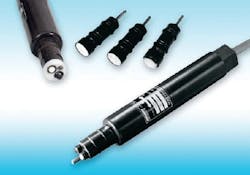
Figure 1. DolpHin unit has lasted far longer than units its replaced in an acid-gas scrubbing system.
To remove hydrochloric acid and meet air pollution regulations, Eastman uses a scrubber with a 20% sodium-hydroxide solution. According to the company, the DolpHin sensors pH glass formulation increased sensor life to six months compared to three to four weeks, at best, for previous sensors. Also, pH measurement equipment and operations costs dropped by almost 90%. Eastman Chemical was successful with the DolpHin series because these fit the companys maintenance style and simply lasted longer.
Tough conditions
Sensors must stand up not only to harsh chemicals but also often to heat. Rosemounts Joseph notes that customers have been requesting sensors that last longer at elevated temperatures and that withstand even higher temperatures. To fill this need, in July 2006 the company launched the PERpHX, a refillable sensor with high performance electrolyte rated to 293°F (Figure 2).
Figure 2. PERpHX unit can withstand temperatures up to 293°F and boasts fast calibration.
FMC Biopolymers, Rockland, Me., uses this device in producing carrageenan from imported seaweed. To maintain pH of 7.5 to 8 in the batch tanks used for processing, the plant controls acid make-up using a triple-redundant pH measurement system in the recirculation line. One benefit of controlling pH is less frequent filter cleaning and replacement.
Rosemounts sensors have been installed there since mid-May, Joseph says. The x brand sensor previously used typically lasted only four days, the local FMC engineer responsible for instrumentation told him. Joseph adds that engineer said, We have tested everybodys pH probe over the last 15 years competitors x, y and z We usually trash them within 24 hours. Its not clear why FMCs process is hard on pH sensors, Joseph explains. But he notes the process temperature is approximately 200°F and the process liquid is thick and contains organics. He adds that the cleaning cycles use strong acids and bases, which also can be problematic.
An added PERpHX benefit is its fast calibration. The x-brand sensor required two minutes for calibration versus 10 to 15 seconds for a new PERpHX and 45 to 60 seconds for an older unit, Joseph recalls the engineer saying.
Polychemie, at its Pearlington, Miss. facility, employs the TB557 pH sensor from ABB Automation, Norwalk, Conn., in an agitated reactor. The company, which manufactures coagulant and solution flocculants, tried several types of pH sensors before ABBs, but they quickly degraded in the harsh, abrasive operating environment, notes Kyle Becker, an engineer at the site. According to ABB, its probes hemispherical glass electrode, which is rated for a true 0 to 14 pH range at temperatures to 284°F, is rugged enough to withstand abrasion and strong caustic.
Uncertainty about uncertainty
Measurement problems also can arise because of the reference electrode. Chemical attack of the glass and poisoning of the reference can be major concerns, notes McMillan on his blog (www.modelingandcontrol.com).
That (reference) electrode is put into a customers process where there are chemicals that will poison the function of the electrode. Anything that is going to come in from the process sulfides, salts, various process chemicals can alter the chemical environment and can add electrical potential and introduce drift, Invensys Connelly explains. Its this poisoning that could create analytical uncertainty, he adds.
The general lack of attention paid to this uncertainty troubles David B. Mills, author of the recent book The Consumer Guide to Industrial pH and ORP Instrumentation published by Cooperhill and Pointer Inc., who is a systems manager at Proctor & Gamble Co.s Ivorydale Technical Center in Cincinnati, Ohio, and principal of Mills Process Consulting, Cincinnati. From a standpoint of pH measurements products, theres a lot of information provided, explains this chemical engineer. You can get the slope, the zero point, the equipotential point, but if you just want to know how much uncertainty in the pH measurement there is, most suppliers dont tell you. Why? I dont think theyve been pressured to provide that from end users.
McMillan also raises the issue of the lack of specified accuracies. In the preface to Mills book he notes there is usually no accuracy specification [actual or reference] on the overall system that includes the sensor.
Providing reference electrode uncertainty to end users is the fundamental challenge remaining in pH measurement, says Mills.
Further challenges
Others, reflecting the variety of issues facing pH measurement, see the remaining challenges differently.
End user Pastushak considers the primary issue, generally, to be the technical capabilities of pH measurement. They are lacking compared to industry wide process control. he says. The second issue is accuracy and response, followed by ease of installation, he says.
Supplying longer lived sensors is the biggest challenge left, Connelly counters. You use the best device available. If you have to replace once a day, once a shift, once a month, thats what you do. But, eventually, pH sensors must be removed, cleaned, calibrated and/or replaced. Astute suppliers will realize that customers want to spend as little time as possible doing these things, he adds.
Offering sensors that can resist clean-in-place (CIP) exposure is the biggest challenge Joseph sees. The glass electrode is severely affected by caustic CIP and the main alternative, the ISFET, is even more so. Whats been done to solve that? Nothing has come close so far, he notes.
Making sensors truly smart is the most pressing issue with pH measurements, says Tom Griffiths, product marketing manager for the analytical instruments group within Honeywells Industrial Measurement & Control Division, Fort Washington, Pa.
Smart equals diagnostics, which equals instrument health, believes Connelly. Use of these smart or intelligent pH sensors isnt common, but is growing, he notes. As end users become more accustomed to diagnostics, they can begin to use them as a valuable tool."
The times coming, though, when users wont want to determine when a sensor needs replacing or cleaning, Griffiths predicts. They want to be notified by the system either by a diagnostic alarm or even by e-mail notification through communications via Ethernet. To meet that need, Honeywell has installed in their Durafet III electrodes, which are silicon-based ISFETs, an electrically erasable programmable read-only memory or EEPROM. It collects information about the calibration that, in the future, will be used to help predict the sensors health and lifetime.
Diagnostics feature in Rosemount Analyticals PERpHX. They [diagnostics] alert the user to a broken glass electrode, a coated sensor and a non-immersed, or dry, sensor, Joseph explains. These diagnostics point the user towards refilling the reference gel, replacing the reference junction and replacing the sensor.
Diagnostics fit directly into what end users are demanding about pH measurement: Make it easy for me to use your the vendors equipment and provide me information that makes my job easier, according to Connelly. After all, he explains, most handle many different measurements and instruments. They dont want to spend a lot of time figuring out how to use the instrument.
Pastushak undoubtedly speaks for many end users when he says more reliable pH data will always be needed, to ensure the highest project quality in the highest yield.